Studio Ruh Brings Oorjaa’s Vision to Design Democracy 2026
For Studio Ruh, Oorjaa’s exhibition begins months before visitors arrive, with research into forest geometry, conversations and drawings, followed by long nights on site overseeing installation. From planning where people will enter and pause to checking the angle of a suspended piece and the finish of a wall, every decision shapes the experience. The studio shares the thinking, collaboration and sustained effort behind bringing the exhibition to life. By Arya Nair
A
t Design Democracy in Hyderabad, this process by Studio Ruh supported Oorjaa’s exploration of forest geometry. Magnified natural forms and handmade materials expressed a vision rooted in craftsmanship, material experimentation and a more conscious relationship with nature.
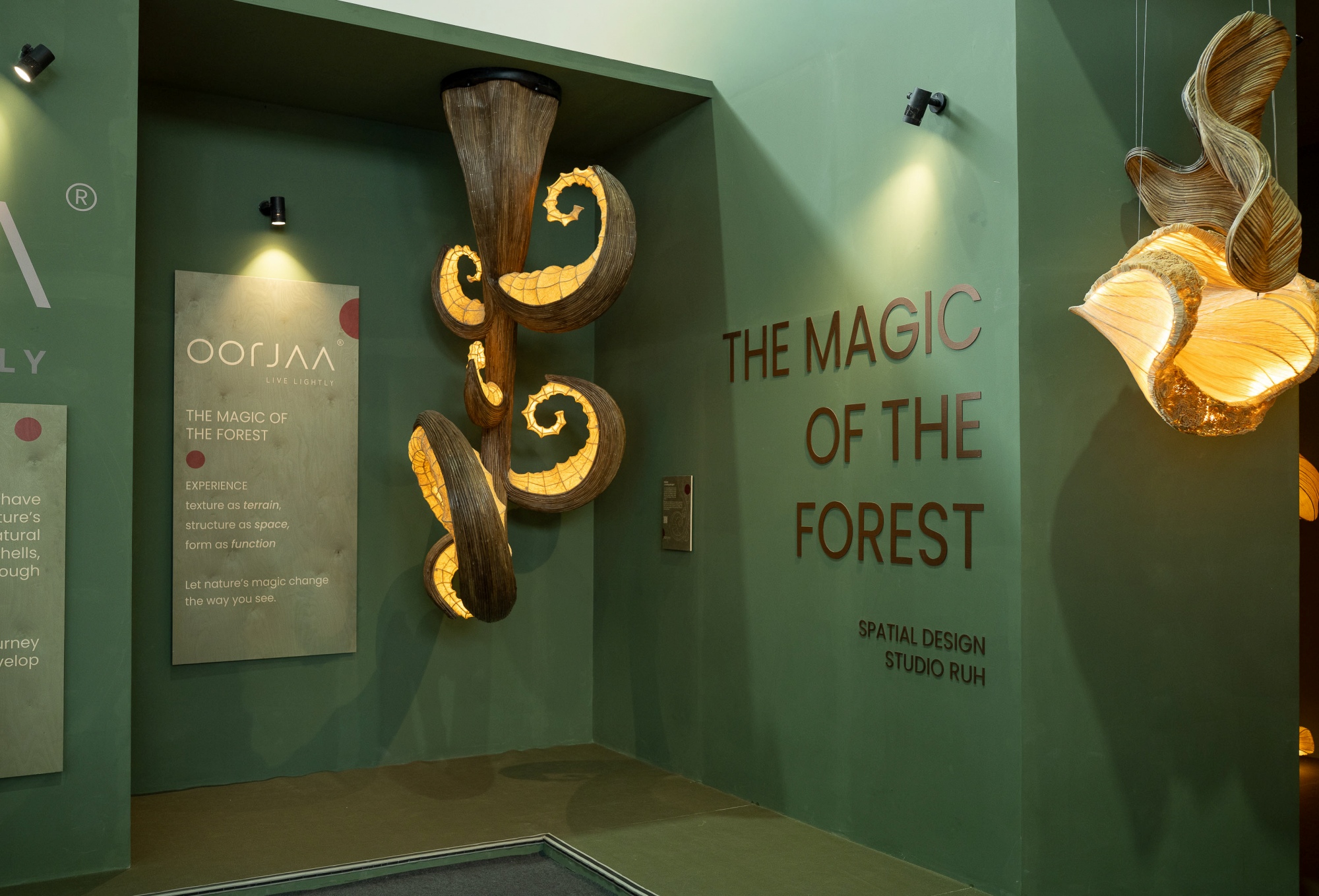
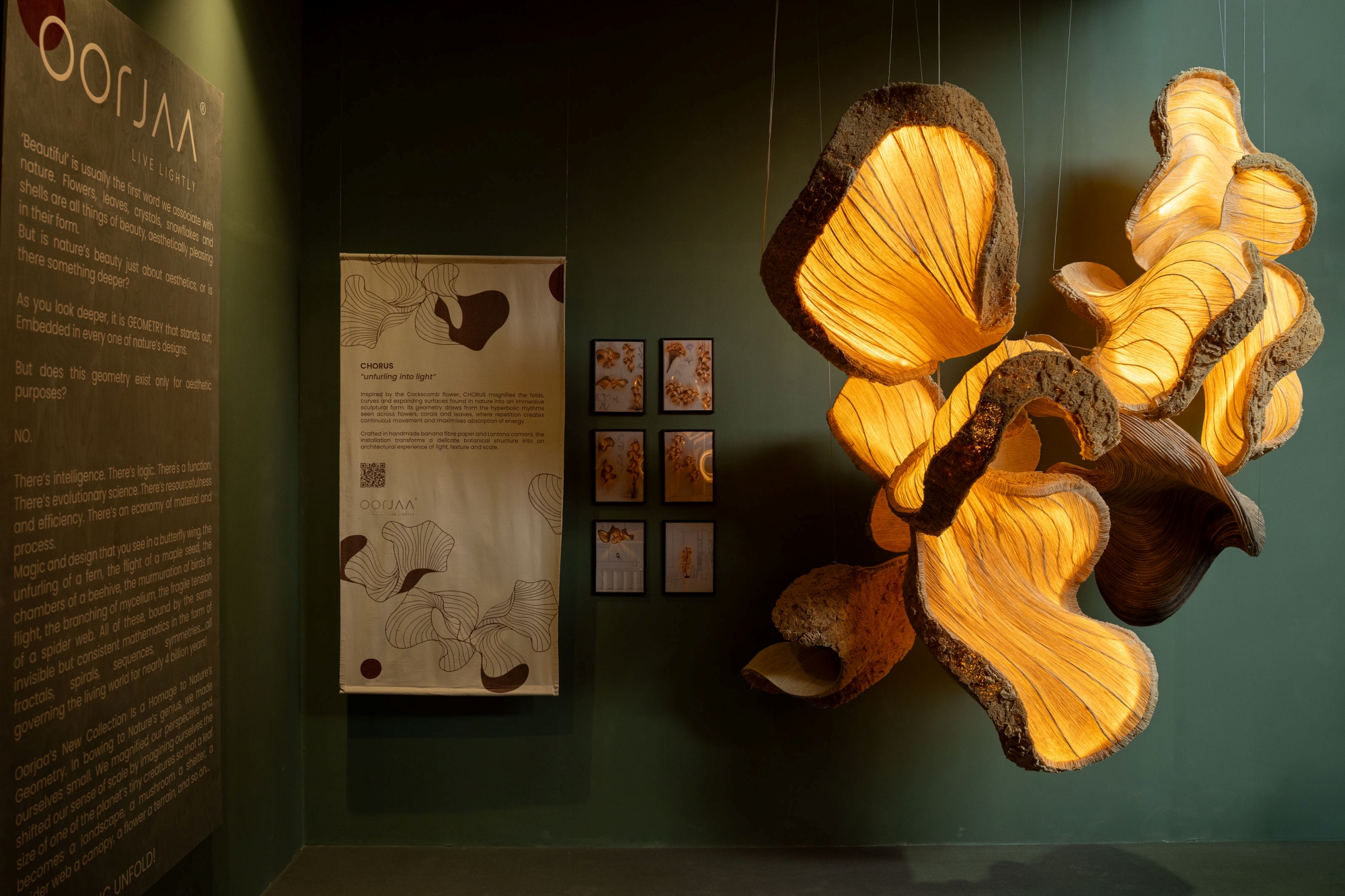
The entry to the Oorjaa magic at Design Democracy 2026
The exhibition not just stunned the visitors; it also invited visitors to consider how objects are made, the people behind them and the natural systems that inspire them.
Studio Ruh translated ideas into a spatial experience through layouts, graphics, film coordination, illustrations and detailed execution drawings. Months of preparation culminated in a demanding installation schedule.
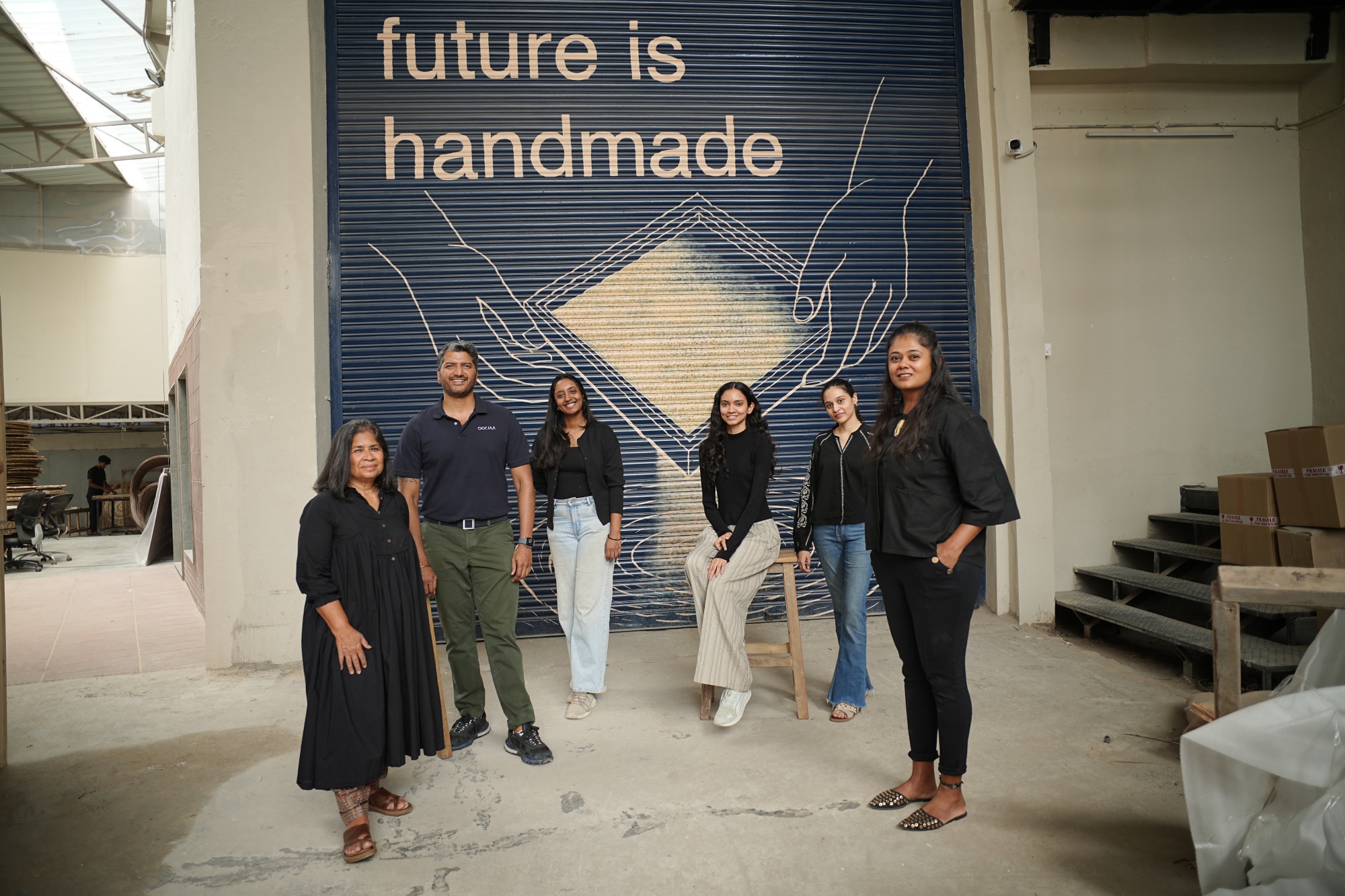
Oorjaa's Radeesh Shetty and Jenny Pinto, with Kavya Sheth and the Studio Ruh team, united by a belief in the handmade.
In conversation with SCALE, Kavya Sheth and Shruthy Sanghvi, founders of Studio Ruh, and Preeti Nataraj, a member of the studio’s team, discuss the work behind the space.
SCALE: How long have you known Oorjaa, and how did your collaboration begin?
Studio Ruh: Our relationship goes back more than six years. We first worked with Radeesh Shetty, one of Oorjaa’s partners, when we designed his home. That was how our friendship began, and we stayed in touch.
When Oorjaa began participating in exhibitions, they were looking for an interior studio to support them with the spaces. Our exhibition collaboration began at India Design ID in Delhi.
SCALE: What connects Studio Ruh to Oorjaa’s vision, particularly its relationship with materials and craftsmanship?
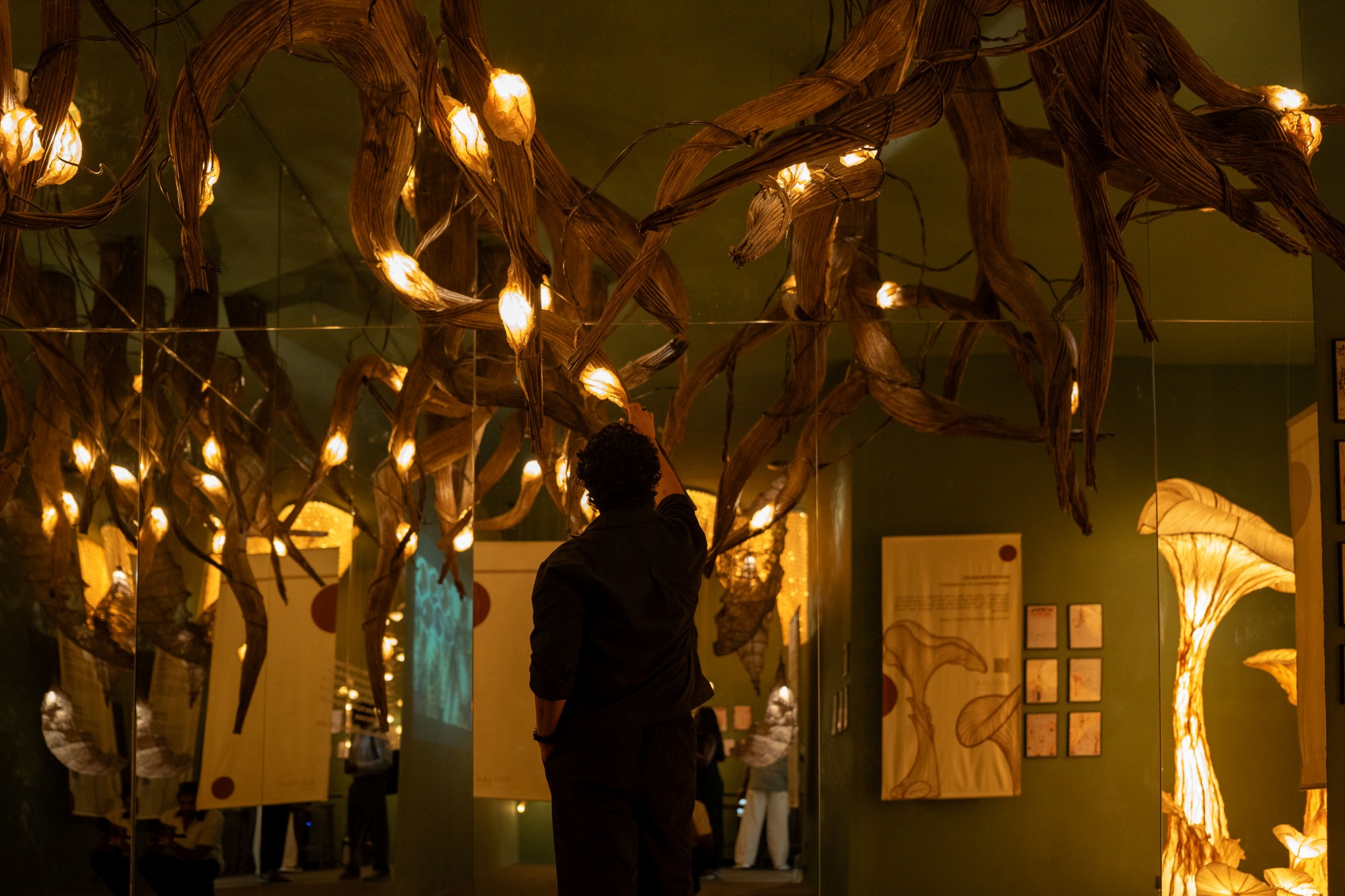
Studio Ruh's mirrors make Oorjaa's Mycelium installation seem endless, inviting visitors to look closer
Studio Ruh: We share an appreciation of craftsmanship and the idea that the future is handmade. We also connect with the need to be more conscious of the impact of what we create.
Jenny Pinto’s commitment to learning papermaking and then training artisans is something we find inspiring. Through conversations with her, we learnt more about the skills and processes involved.
Oorjaa works with different craftspeople according to the material. With lantana, this includes tribal communities involved in its removal and use. With banana pulp, artisans learn to make paper, understand quality and develop techniques.
Experimentation with strings, wires, copper and dipping processes continues to expand those possibilities.
The relationship between material, skill and object interests us. Oorjaa’s work has grown from smaller pieces to large installations, including those in airport terminals, while exhibitions in India and abroad have brought its approach to wider audiences.
SCALE: What was the brief for Design Democracy, and how did you turn it into a workable exhibition?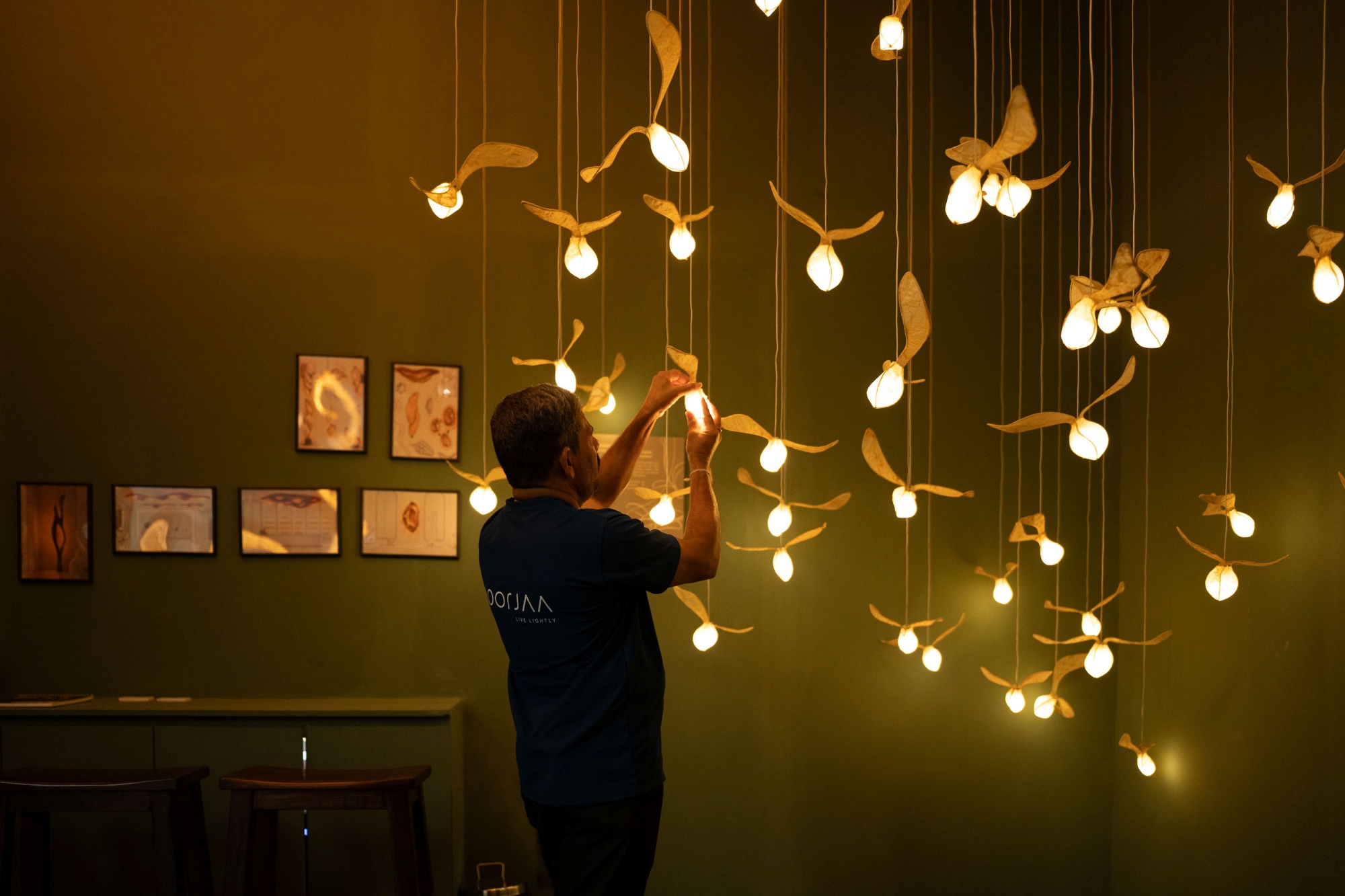
Careful adjustments bring Samara's floating seed forms into place.
Studio Ruh: We usually begin with the exhibition space and its dimensions. From there, the discussion is open. Studio Ruh and Oorjaa explore the concept, the direction and what we want visitors to understand.
For this collection, Jenny suggested looking closely at forest geometry. We explored possibilities ranging from familiar leaves to complex flowers and structures.
We might initially consider four concepts, then narrow them down through meetings, keeping time and budget in mind. Once we have perhaps seven or eight installations, we return to the drawing board to understand how they can work together.
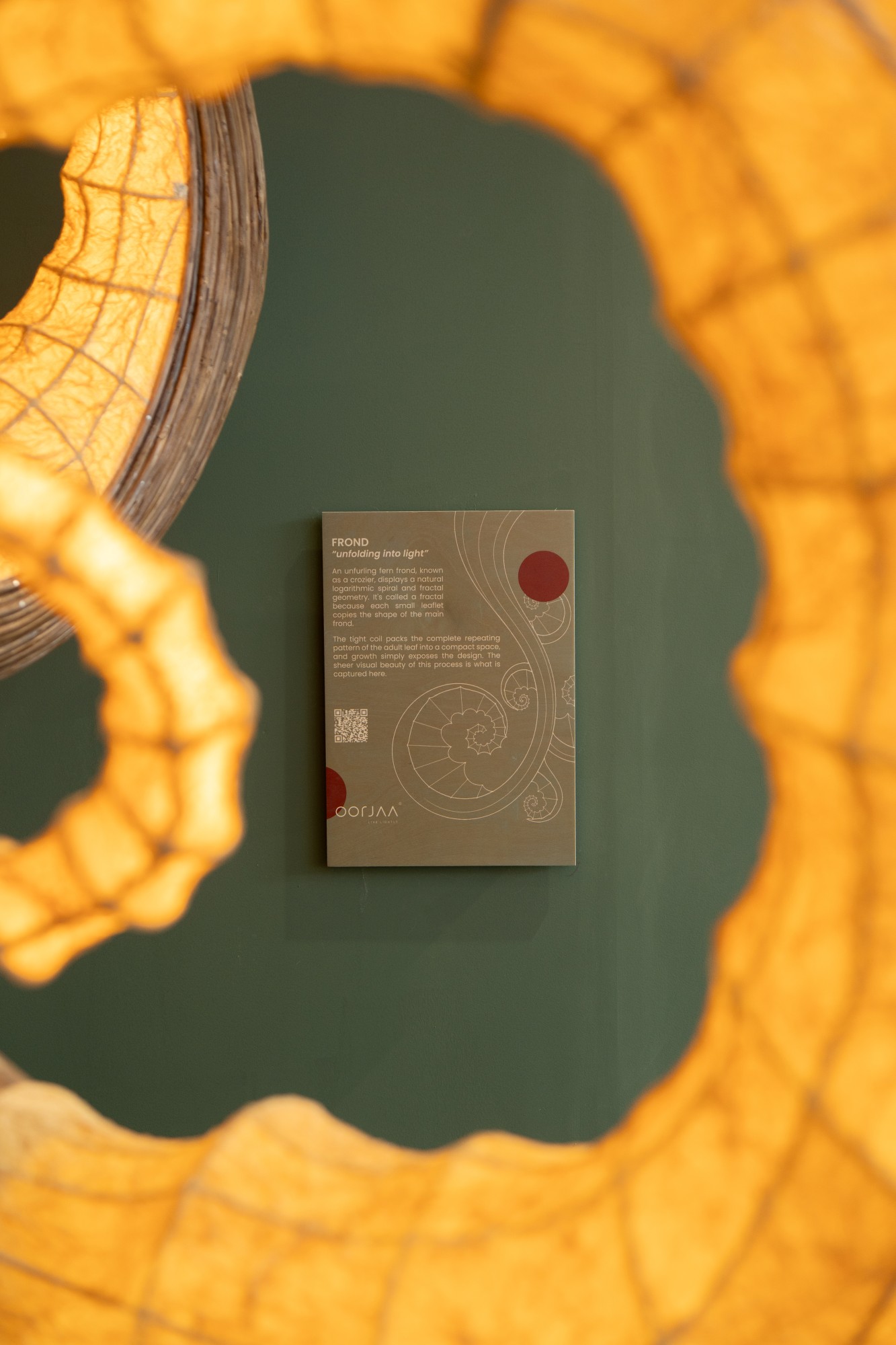
Fibonacci: A fern's unfolding spiral becomes part of Oorjaa's exploration of forest geometry
Our role includes the layout, scale, branding, graphics and information visitors encounter, followed by the drawings and coordination required to build the space. Each decision helps translate the collection into an experience.
SCALE: What did the research involve, and how did this approach differ from your earlier exhibitions?
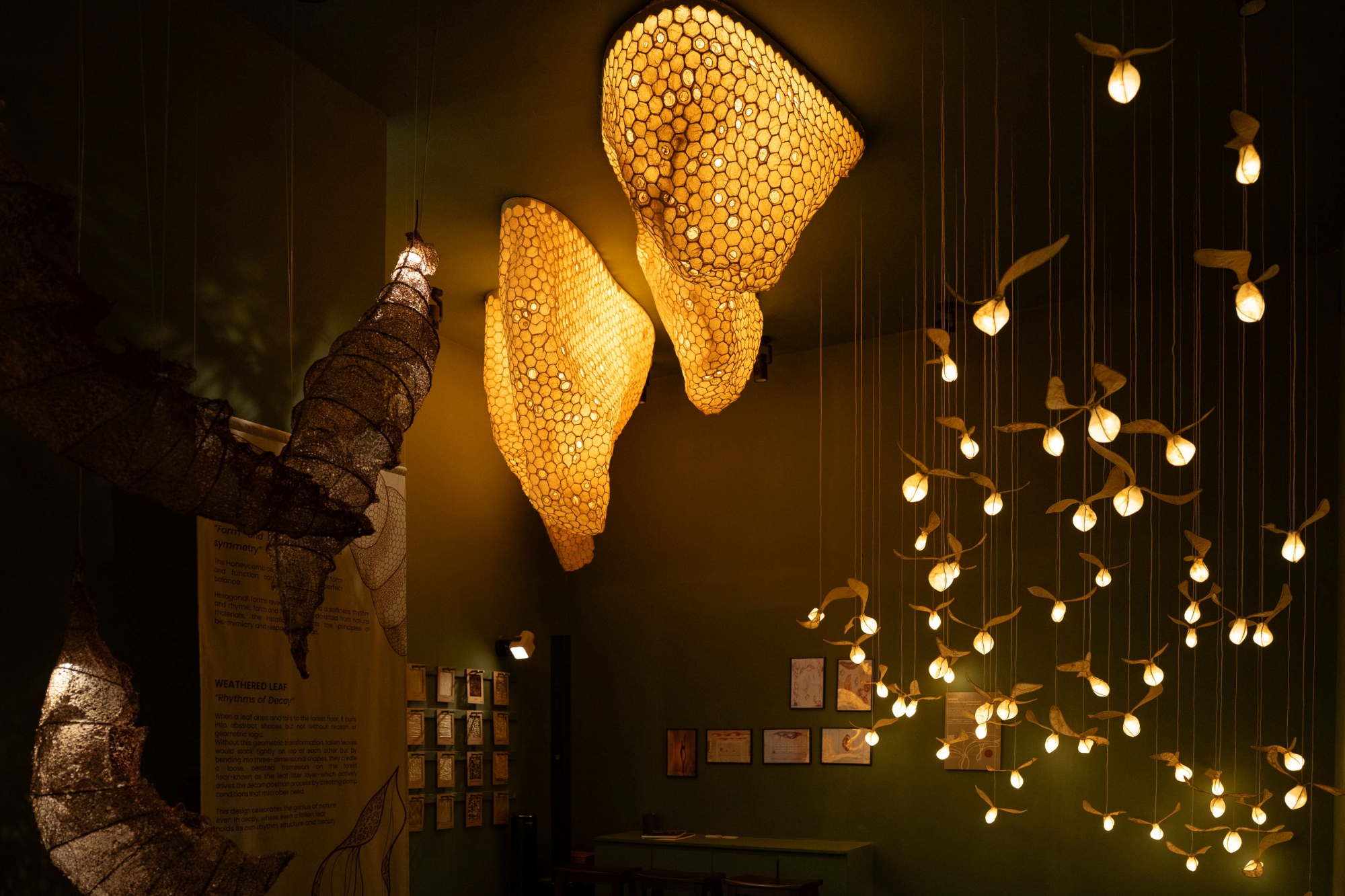
Leaf, honeycomb and samara: Studio Ruh gave each installation room to be seen within the larger exhibition
Studio Ruh: We wanted to understand the logic behind what we find beautiful in nature. We studied how a fern unfolds, how a shell spirals and how branching patterns appear in trees and rivers. Fractals, hexagons, symmetry and sequences became part of the exploration.
The honeycomb was one example of geometry creating space efficiently with very little material. These structures have a purpose within the natural world.
Our previous exhibitions included Submerge and Wild. With Wild, we explored broader forest formations and elements such as leaves and seeds. This time, we moved closer to the details and magnified them.
SCALE: How do you decide where the booth should sit and how people should move through it?
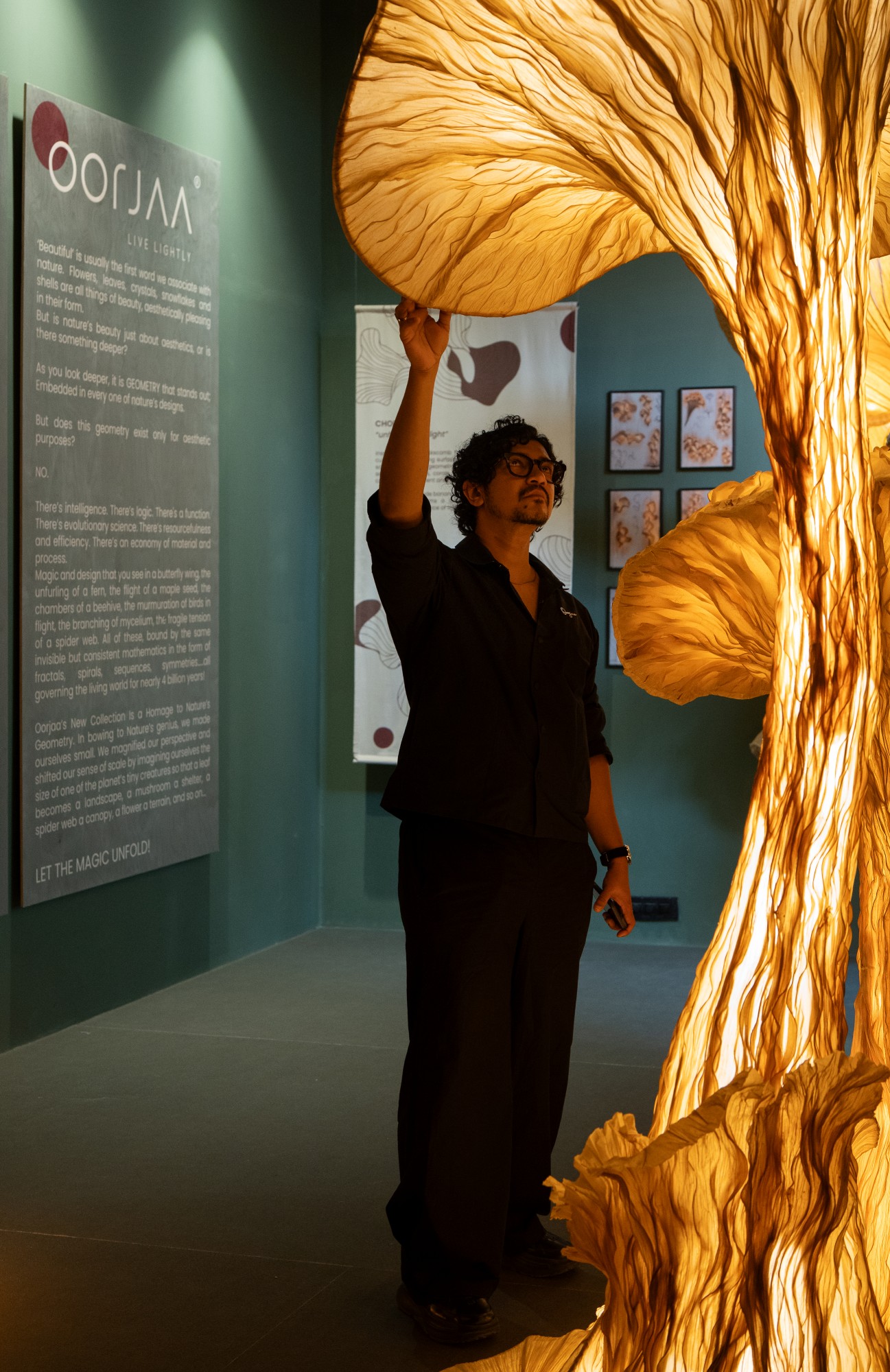
The placement of the booth, its entry and its layout, are also factors that give the exhibits their due
Studio Ruh: We become involved before Oorjaa finalises the booth. We consider visibility, circulation and where people will naturally pass. A location near a conference area, for example, can bring visitors past the space as they move between talks.
At Design Democracy, the corner position has worked well. The exterior creates the first invitation to enter, while the interior needs enough darkness for the illuminated pieces to be appreciated.
An L-shaped layout allows the collection to reveal itself gradually. Visitors encounter one side, turn a corner and see the wider arrangement. Towards the end, a discussion table provides space to slow down and speak with the Oorjaa team.
We examine entrance widths, partition angles and sightlines. Large installations can become overwhelming when placed one behind another. Each needs a pocket of space where it can be appreciated individually.
SCALE: Was there a design decision that particularly depended on Oorjaa’s trust in the studio?
Studio Ruh: The mirrors were one example. The booth was around 768 square feet, giving us room to explore the idea.
We used mirrors with a magnified installation inspired by a mycelium network, creating a sense of the structure continuing into infinity. Initially, there were concerns about whether the mirrors would feel excessive or reflect too much of the surrounding booth.
Oorjaa trusted us to work through those concerns and make sure the mirrors added something meaningful. That confidence allowed us to be bolder. It comes from understanding how both teams work and what we want to achieve together.
SCALE: How do you light the surrounding space when the exhibits themselves emit light?
Studio Ruh: The additional lighting is kept functional. We want people to appreciate the materials and techniques Oorjaa has developed.
Signage, information panels and material swatches need to be clearly lit so visitors can stop, read and interact. The rest of the space supports the experience of the illuminated pieces.
The swatches also show that the installations represent only part of Oorjaa’s explorations. A material or technique can be developed into many other shapes, sizes and forms. The space needs to help visitors appreciate what they see while understanding those wider possibilities.
SCALE: How do you make the materials and the work behind the objects visible?
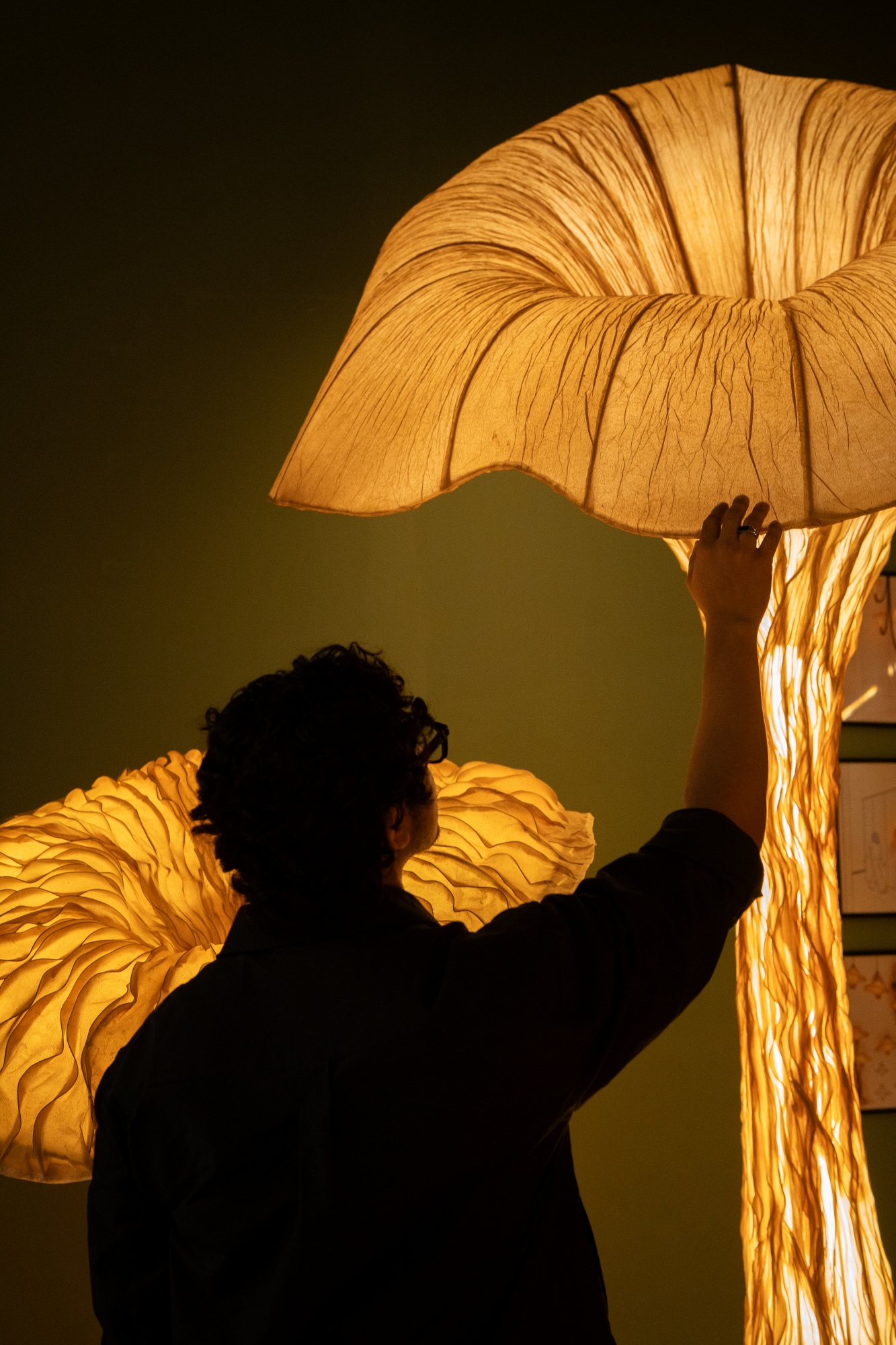
The touch and feel is equally important in an exhibition
Studio Ruh: We create opportunities for people to touch and understand materials wherever possible. At Sabha in Bangalore, visitors could participate in making paper from pulp. That direct experience communicates the skill and effort involved.
When space is limited, and visitor numbers are high, we also use film and sound. We worked with a cinematographer to document the making process, developing the brief and coordinating with Oorjaa’s workshop.
The projection blends into the exhibition space, sometimes interacting with fittings placed in front of it. Visitors can see how paper is made and how structures such as stainless steel or copper mesh, aluminium frames and mild steel frameworks support the pieces.
We also document the installation and visitors’ experiences. This allows the story to continue through social media, reaching people who could not attend and extending the conversation beyond the event.
SCALE: How do you help visitors imagine the pieces in their own spaces, and how much can they be adapted?
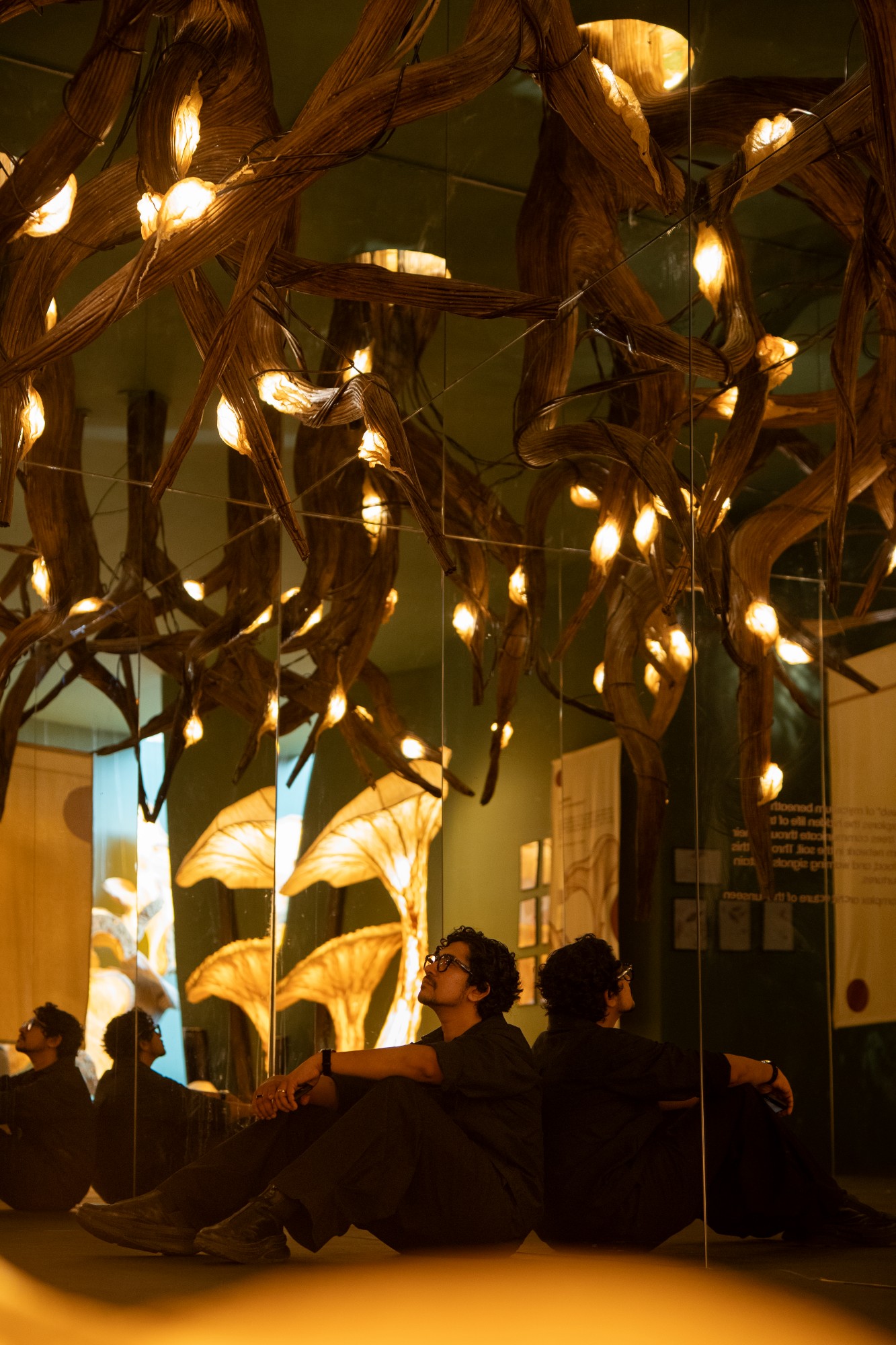
Mirrors extend the mycelium network, creating a place to pause and look up
Studio Ruh: Visualisation is important because someone might love an installation without knowing how it could work in a home or project.
We developed illustrations showing pieces in five or six settings or configurations. These explored different scales, arrangements of modules, floor and ceiling applications, and spaces with double or triple heights.
Kavya worked closely with Oorjaa on these possibilities, bringing a designer’s understanding of how the pieces could be used.
The illustrated settings were deliberately relatable. Visitors could see how a technique might translate into a home, office, restaurant or resort. This prompted more specific conversations about adaptation.
There is also room to explore form, finish, colour and colour temperature. Someone might want a different light source within a piece. The exhibition provides a starting point for those possibilities.
SCALE: Which pieces drew particular interest, and what did visitors respond to?
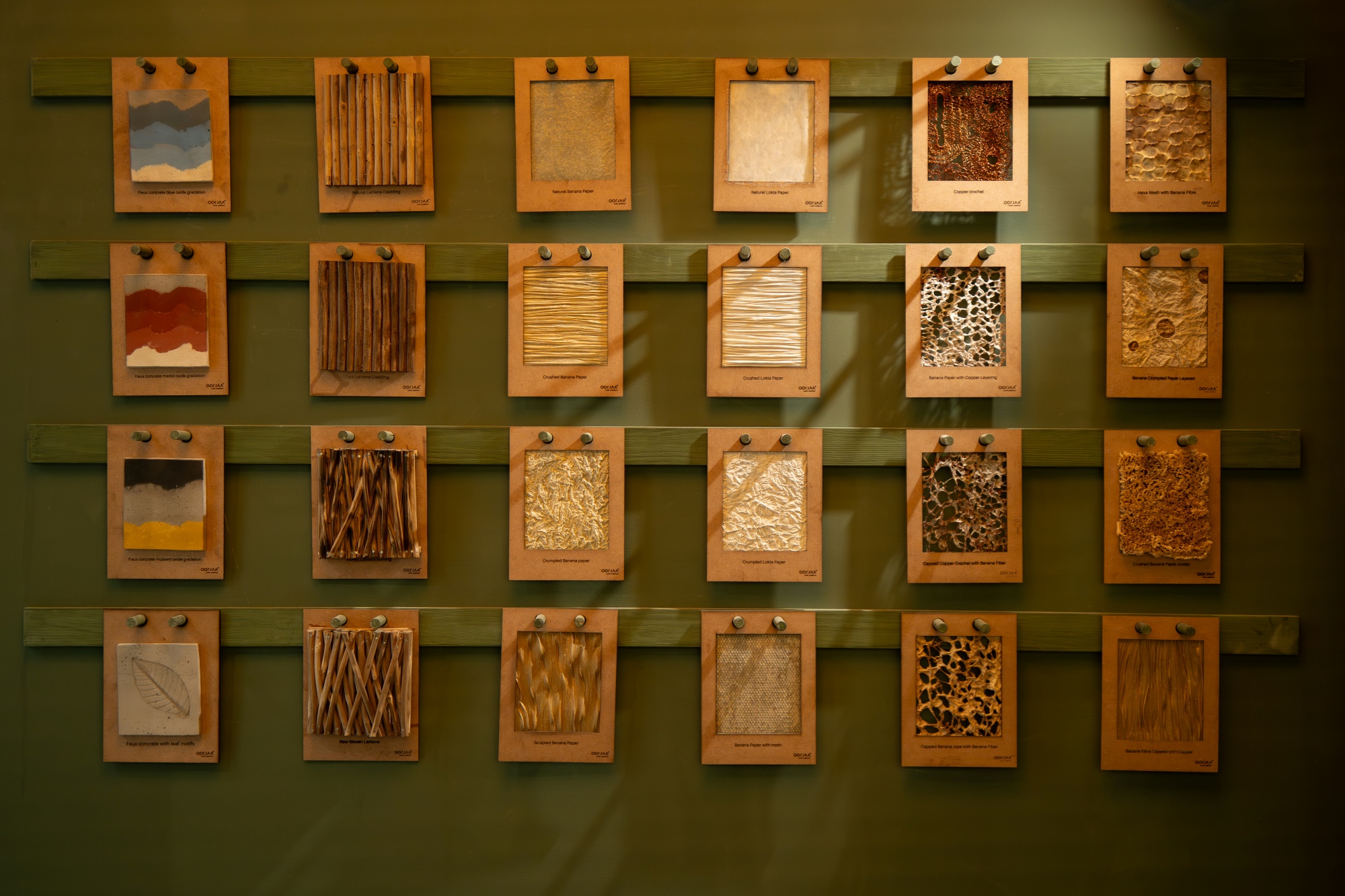
Material samples help visitors understand the craft behind the finished pieces
Studio Ruh: Different people connected with different pieces. Oorjaa received positive feedback, alongside enquiries and orders for several products.
The honeycomb prompted interest in placing it above a home bar or restaurant counter. The cockscomb attracted attention for its paper technique, while the enlarged mushroom forms made people feel small and encouraged them to examine details closely.
The Samara installation offered another experience. Its seed forms suggested movement towards the ground and could respond to air and people moving around them. That gave it a dynamic quality alongside the larger, more fixed installations.
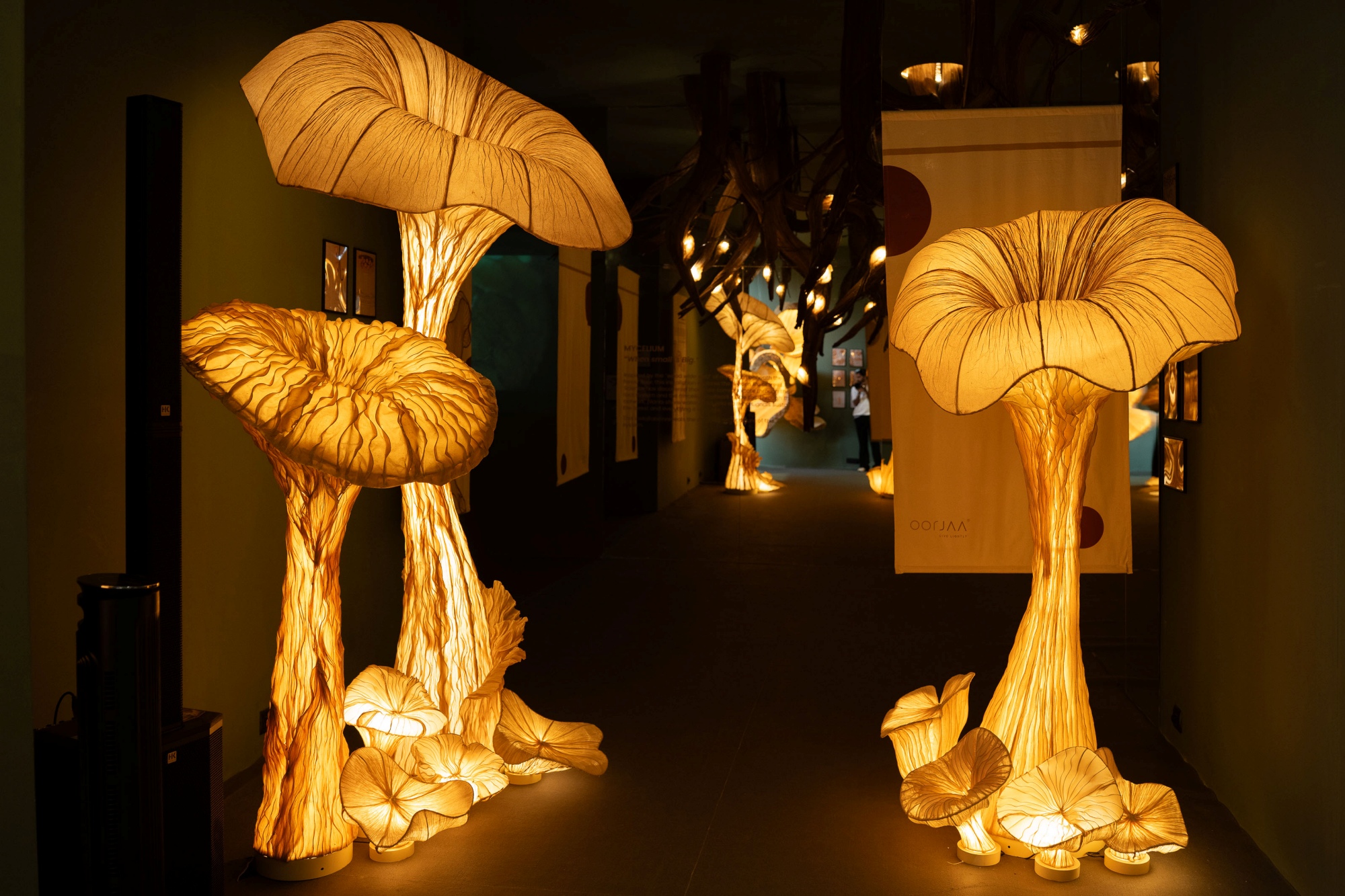
Enlarged mushrooms invite visitors to experience the forest from a smaller creature's perspective
Visitors also discussed how it might be reimagined elsewhere. Those conversations connected the experience of the exhibition with the practical possibilities of the collection.
SCALE: How does the concept travel between exhibitions?
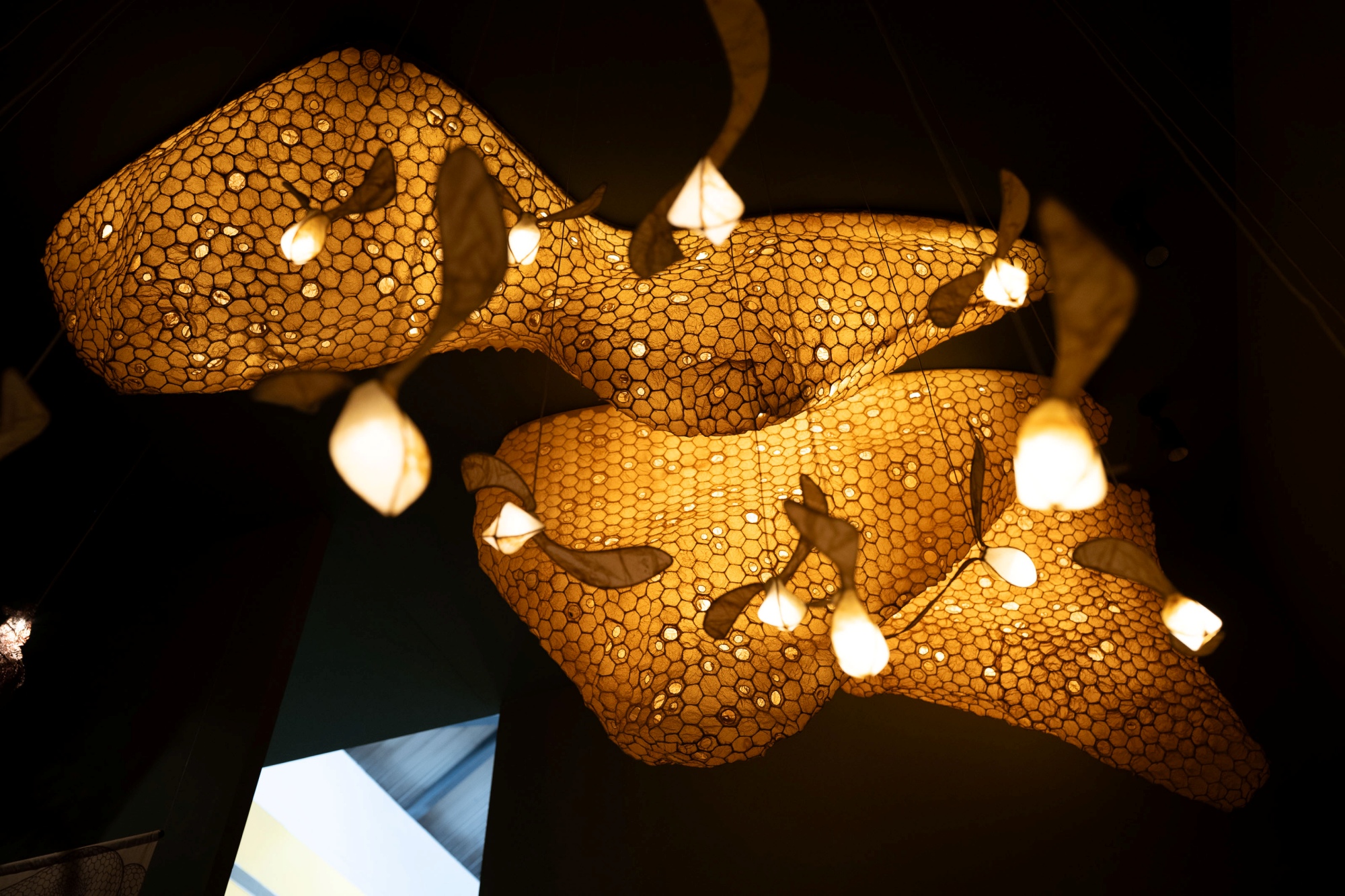
The honeycomb reveals the natural geometry that guided the exhibition's research
Studio Ruh: We planned to extend the larger concept from Design Democracy in Hyderabad to India Design in Mumbai, with a few installations changing between the two.
The collection and its story can retain continuity, while the layout and combination of pieces respond to the next space. We return to the same questions about what to highlight and how visitors will experience it.
The concept establishes a direction, and the spatial decisions determine how that direction becomes tangible.
SCALE: How do you balance Studio Ruh’s voice with Oorjaa’s identity, and what makes the exhibition successful for you?
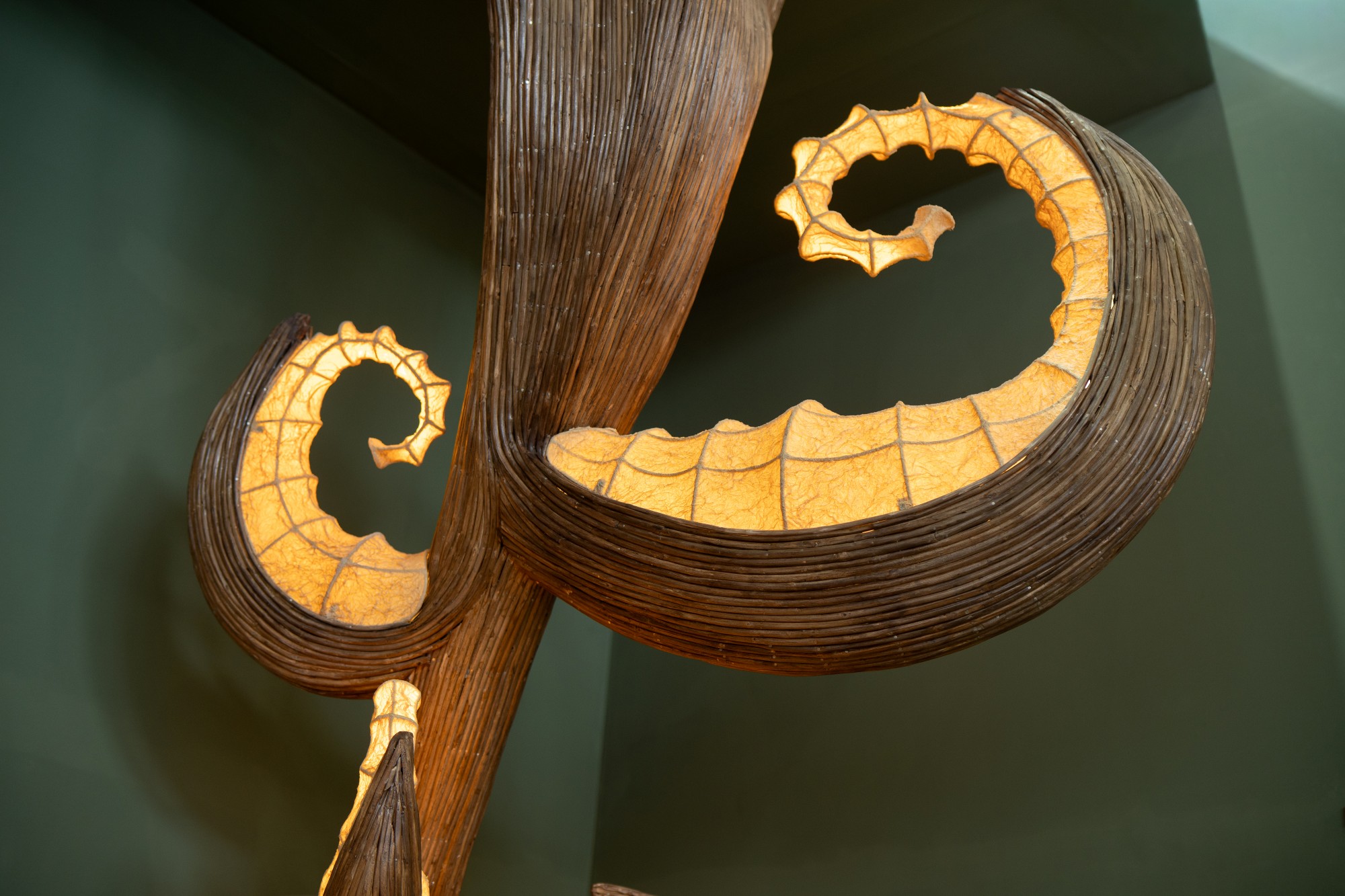
Putting Oorjaa's ethos into an experience
Studio Ruh: Our ethos is to extend Oorjaa’s story. We want visitors to understand the work, enjoy the experience without feeling overwhelmed and remember it afterwards.
That takes considerable design effort. We spend countless hours on the palette, carpet, finishes and layout. The branding goes through multiple iterations. There is a reason for where someone enters, what they see next and where they stop.
When those decisions come together, visitors can focus on the collection and its ideas. If someone leaves noticing how a fern unfolds or thinking more closely about the geometry of nature, the exhibition has achieved something meaningful.
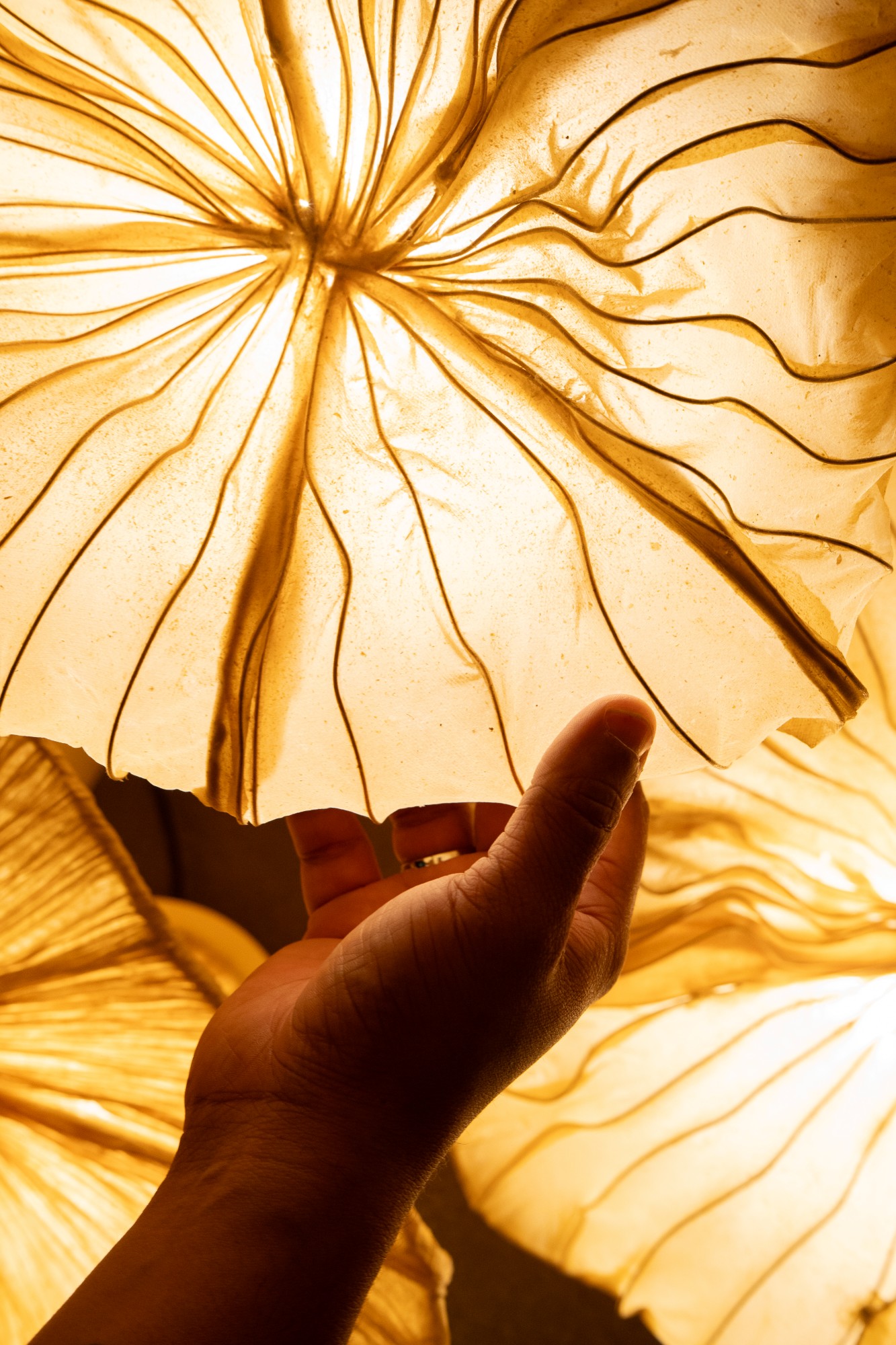
An exhibition to pause and look closely
We hope they leave more attentive and appreciative, with a stronger connection to the materials, processes and people behind the objects.
At Design Democracy, Studio Ruh brings Oorjaa’s vision into focus through carefully considered decisions. Research becomes a layout, drawings become structures, and hours on site shape how each piece is encountered. The exhibition makes a quiet point about design: giving people space to pause and look closely takes time, skill and considerable care.
All Images from the exhibition, courtesy CrewCat Studio @crewcatstudio