

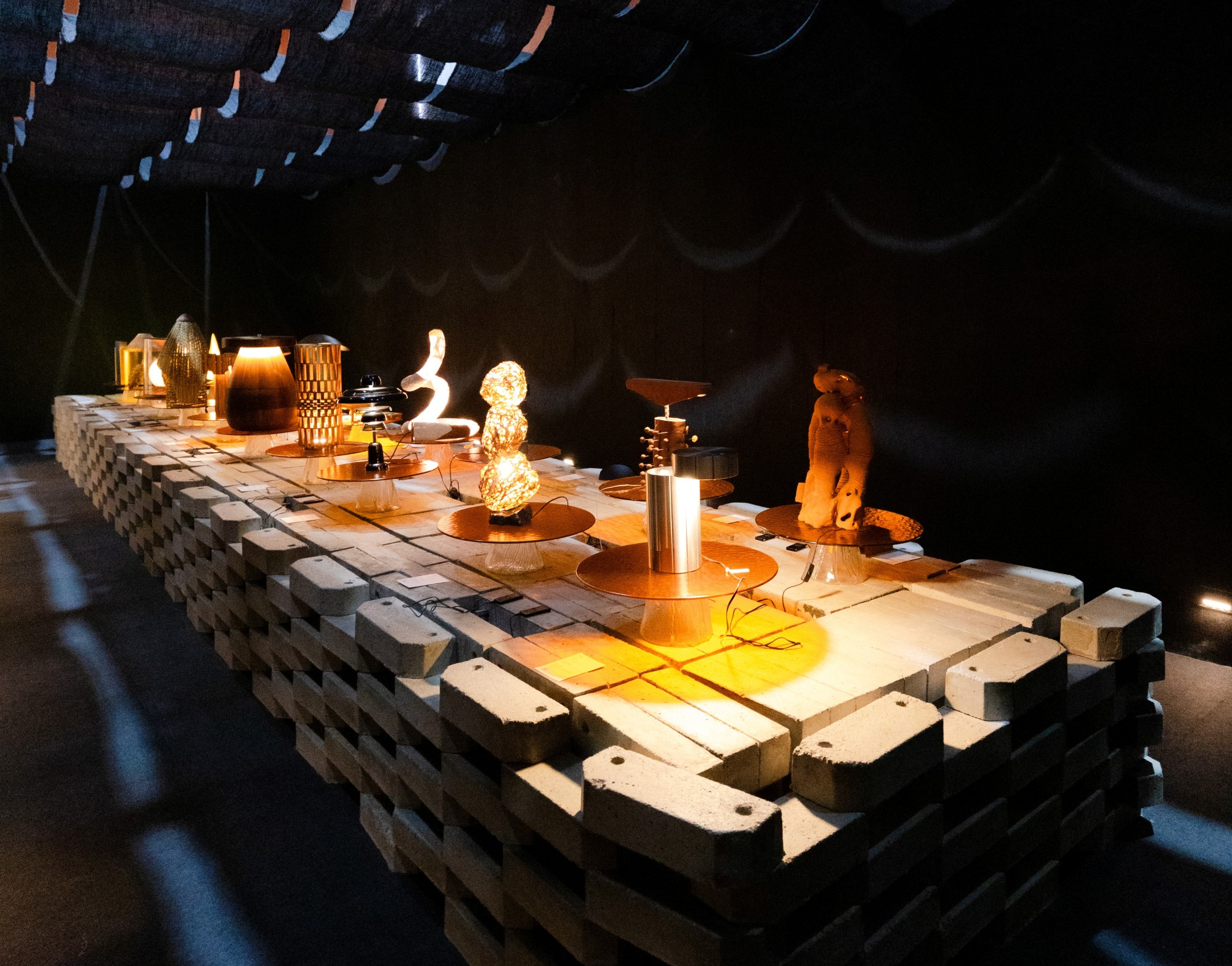
Gallery of Sustainability: 20 Lamps, One Way of Thinking
At Design Democracy 2026, the Gallery of Sustainability brought together 20 designers and studios through Root & Radiance, an exhibition curated by MuseLAB around material, craft, method and light. The participating designers were invited to approach sustainability through their own choice of materials and methods of making. The result was 20 lamps exploring ideas that ranged from biomaterials and construction waste to indigenous craft, reclaimed wood and objects designed to last.
R
oot & Radiance began with the simple premise: Sustainability as a catalyst for better design. For MuseLAB co-founder Huzefa Rangwala, the starting point was to question whether a product can be truly beautiful and functional while being genuinely sustainable. Especially in recent times and around the way the word sustainability itself is used.
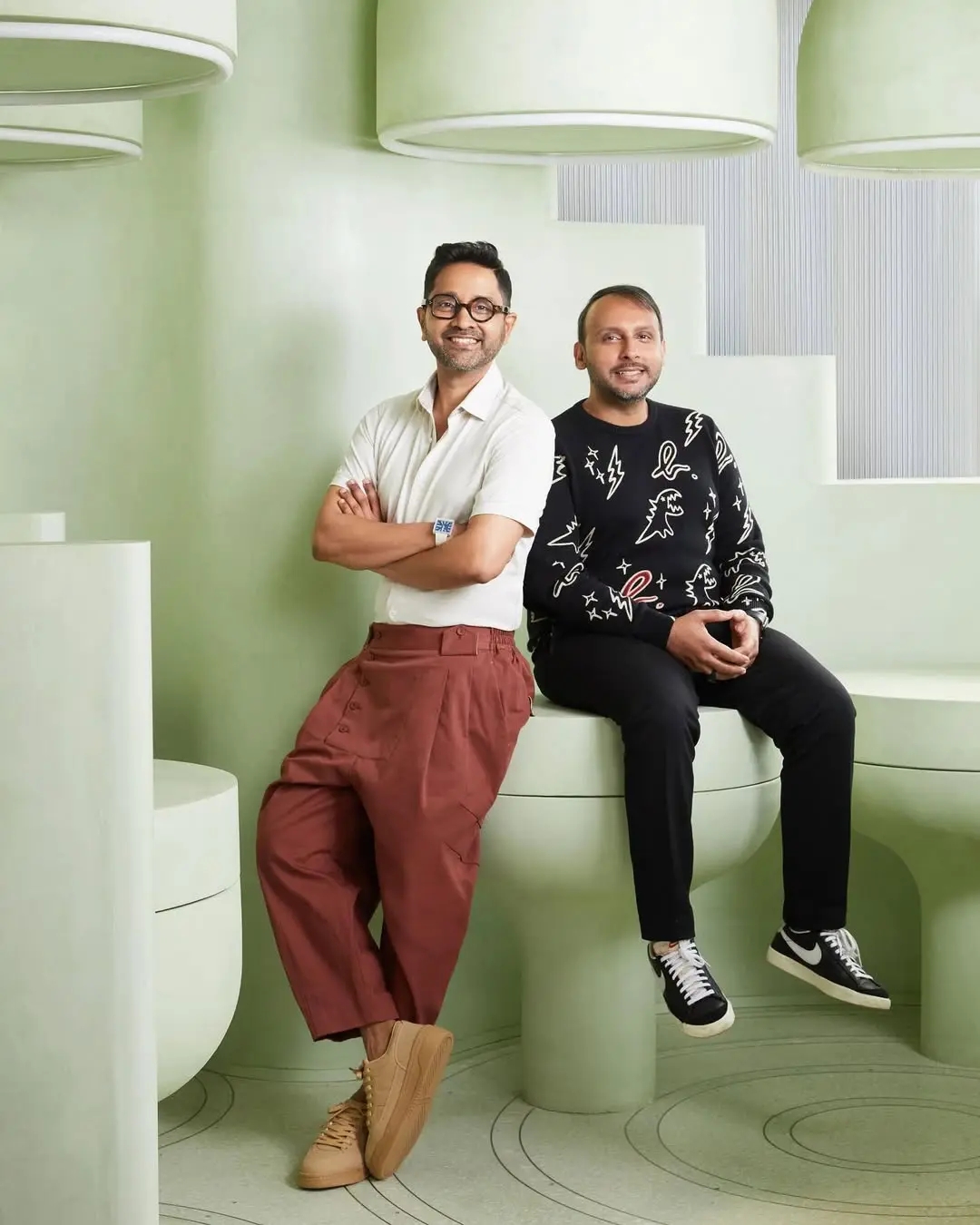
Huzefa Rangwalla and Jassim Pirani, Founders of MuseLAB, an architecture and interior design studio based in Mumbai, India.
“Sustainability is such a greenwashed word; it's overused as a marketing tool,” he says.
The brief therefore asked designers to think beyond the label: an object should last, be capable of being put back together if it breaks, and use materials derived from waste, upcycled sources or those that can eventually return to the earth.
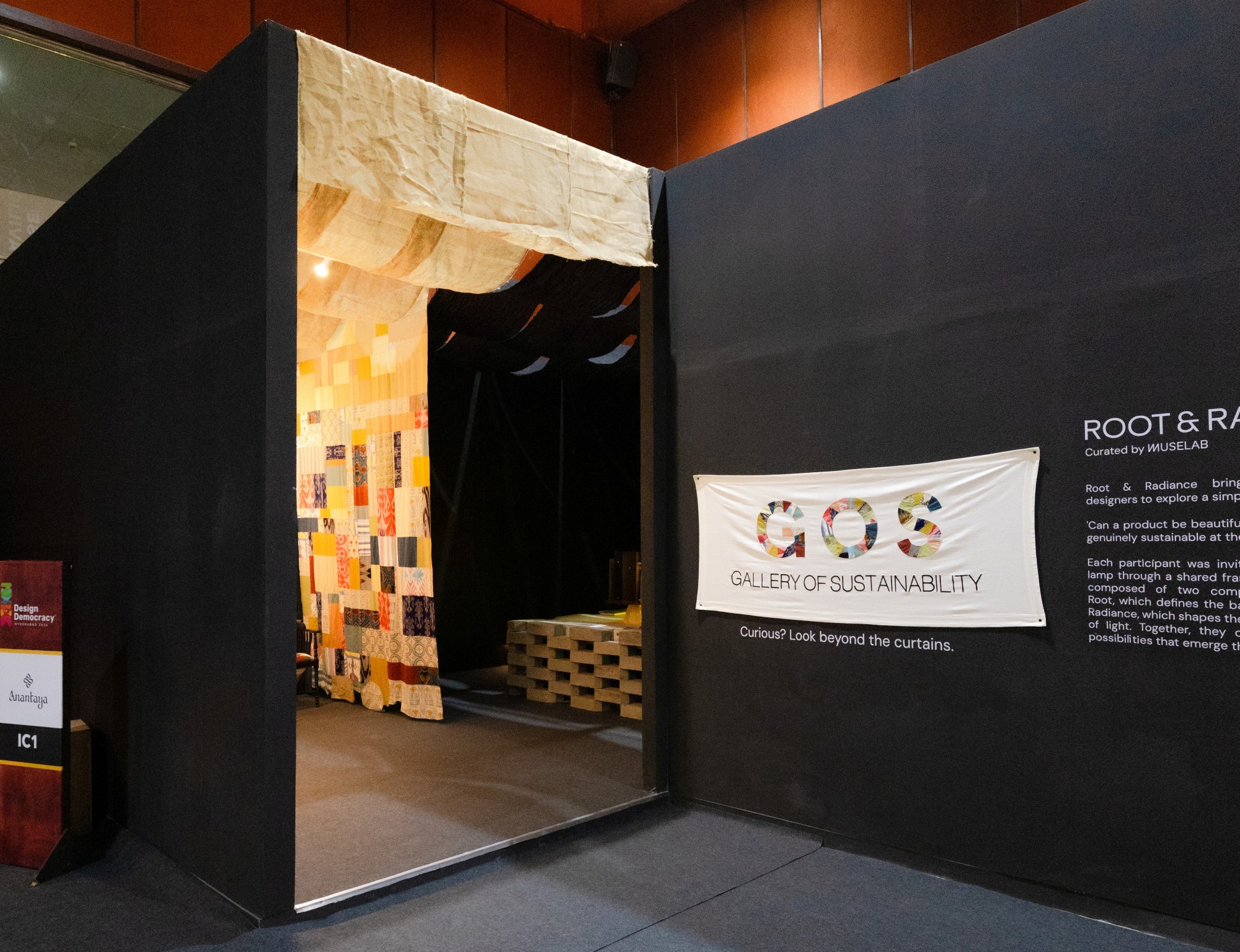
The Gallery of Sustainability at Design Democracy 2026
“More than an exhibition of lighting, Root & Radiance is an exploration of how thoughtful design can foster longer relationships between people and the objects they live with. It leaves us with a simple but important question: What if every product was designed to be repaired, not replaced?” explains Huzefa.
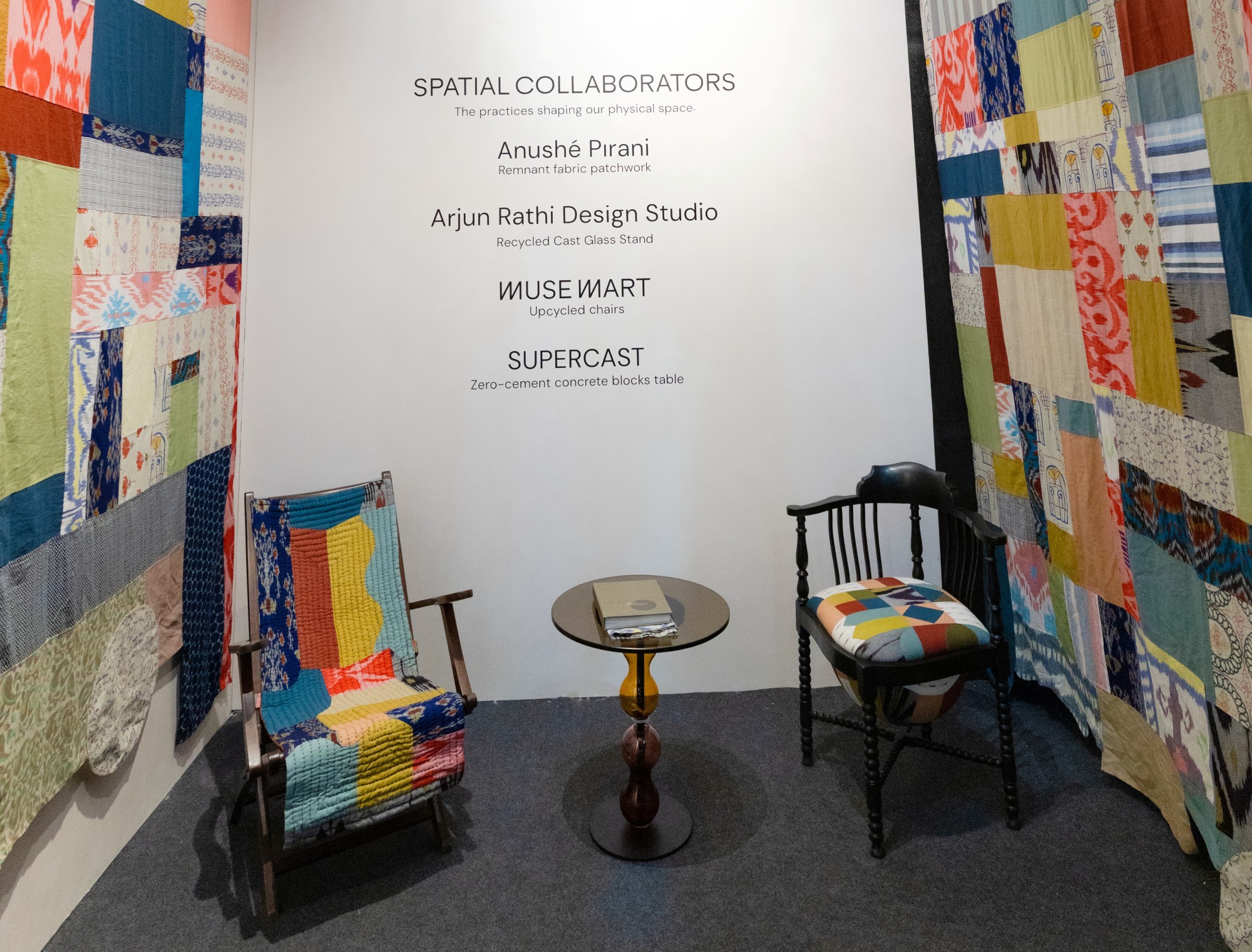
The Gallery of Sustainability pavilion was designed with intent.
On how a natural material can look unfinished and whether design is about celebrating natural flaws, Huzefa clarifies, “An unfinished product feels lazy, an honest product feels studied. When a master craftsman or a sharp architect works with a flawed piece of local stone or a volatile organic texture, we believe they are celebrating its geometry rather than hiding its scars. The refinement comes from the precision of the details, the elegance of the mechanical joints, and the way the lamp’s two distinct elements, the Root and the Radiance, interact. A raw material only looks unrefined if the design lacks discipline. Here, when we look at the 20 lamps, the discipline is tight and studied.”
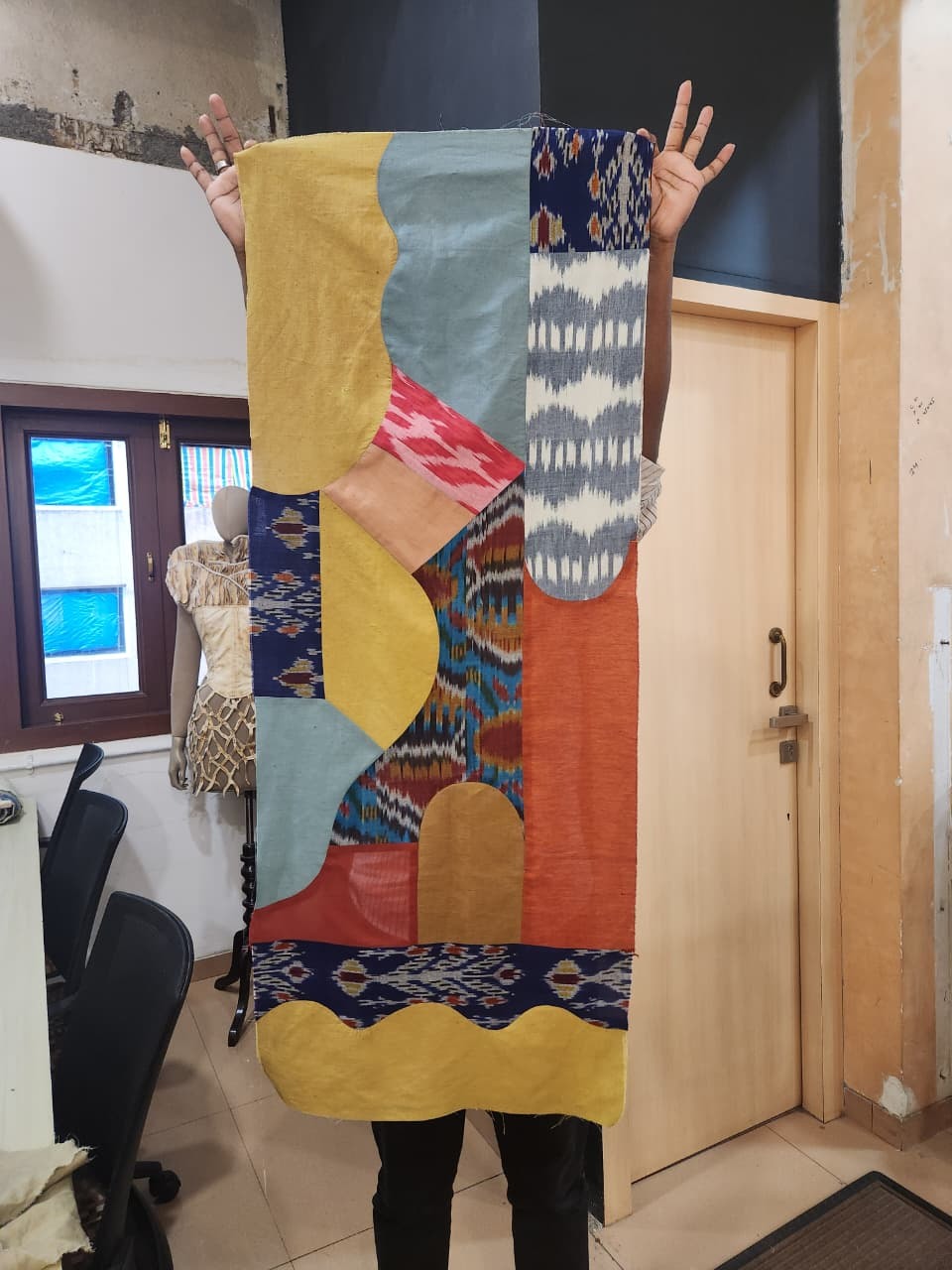
Gallery of Sustainability interiors were designed with the fabric stitched together from remnants of past collections by Anushé Pirani
The Gallery of Sustainability is also designed with clarity and intent. MuseLAB used design-first Anushé Pirani’s help to weave an entrance banner, curtains, and chair upholstery from the quiet remnants of past collections, pieced into a single, consistent patchwork grid.
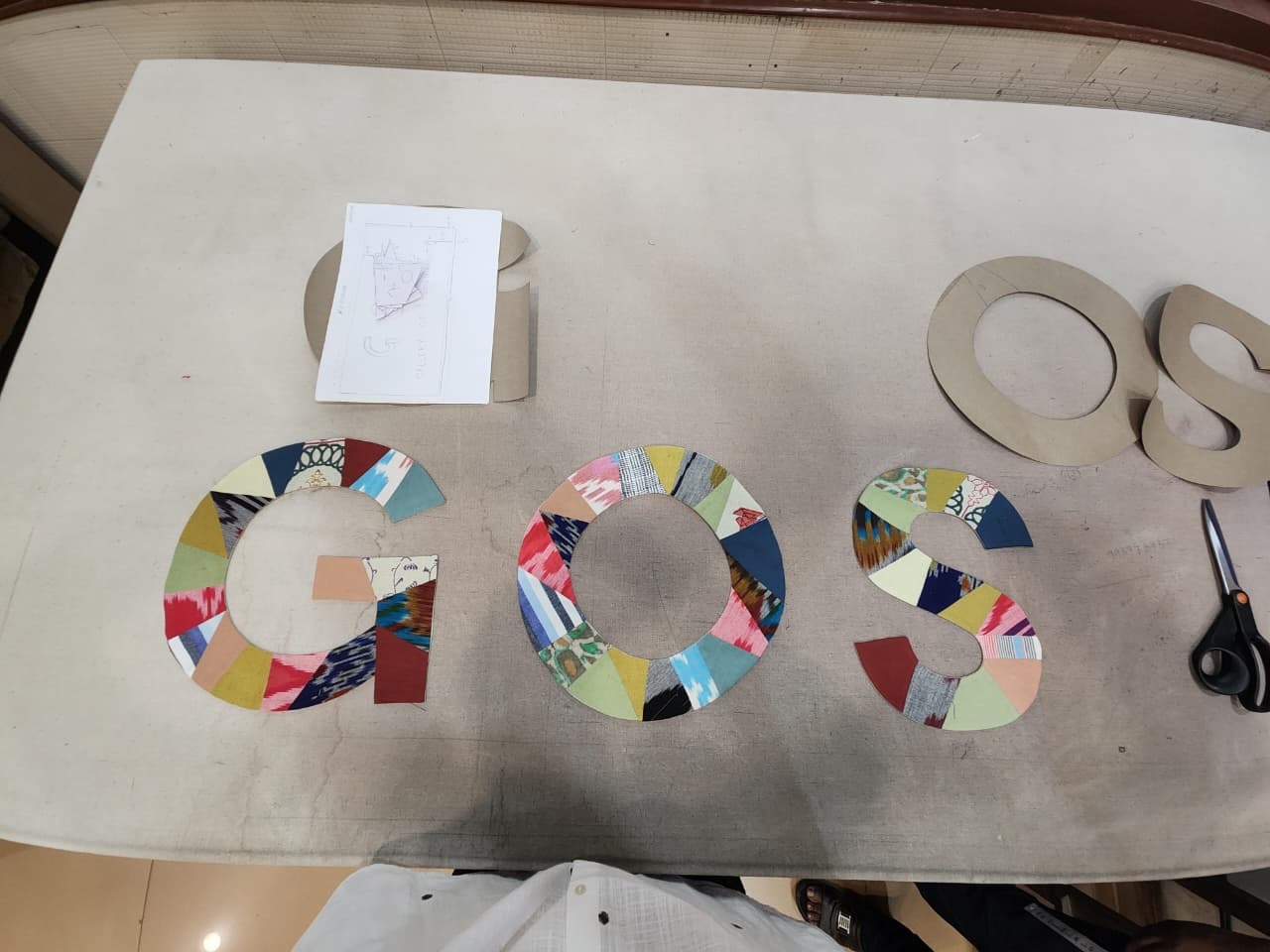
The making of the pavilion banners from fabric.
Each fragment carries the memory of a season before it, reassembled here into something whole. Much like how the entire gallery has 20 designers working towards a common goal of thoughtful design.
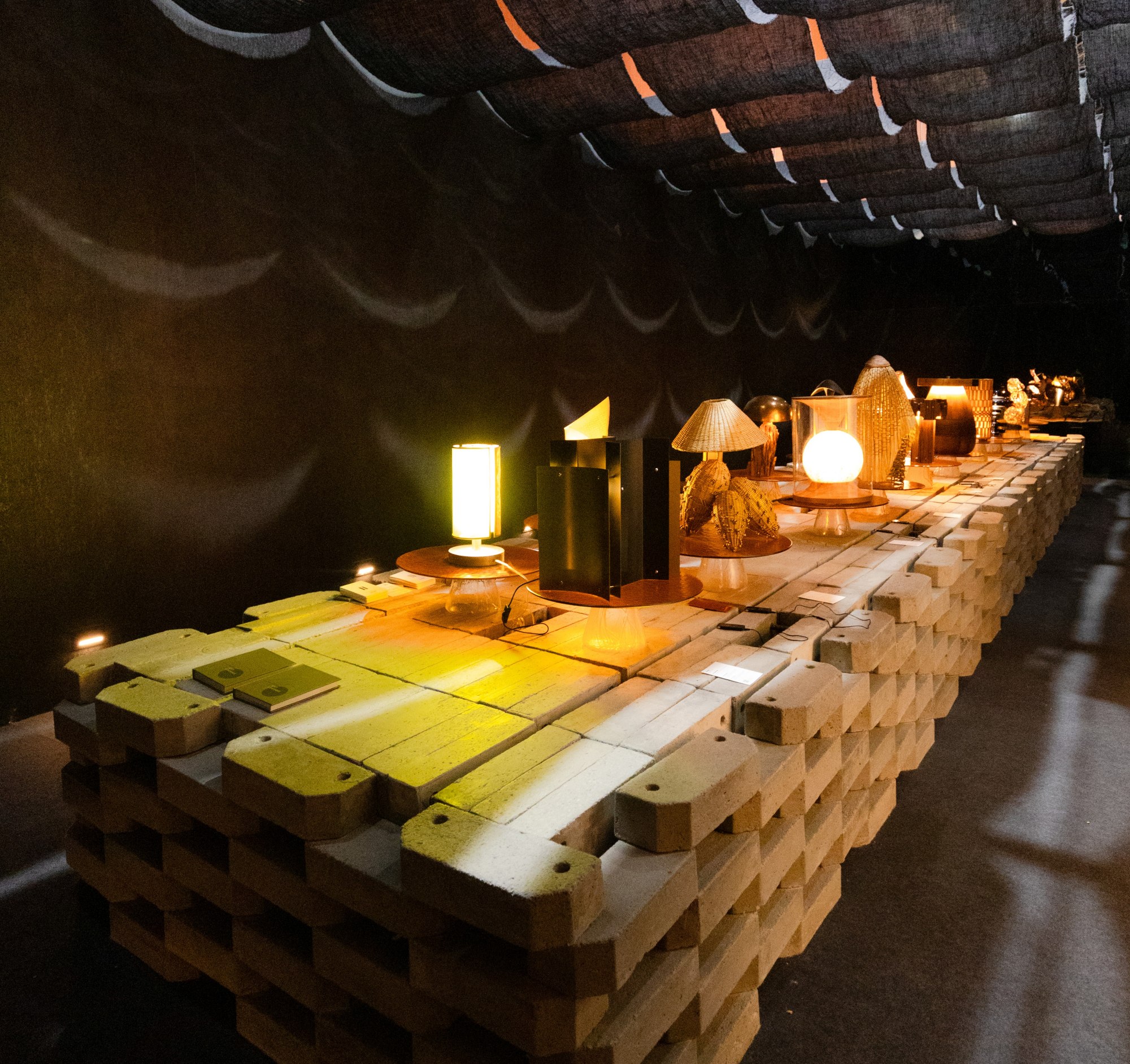
20 Lamps at Root & Radiance, GoS
Among the 20 lights, Huzefa points to four very different responses to the brief: Anomalia, This and That, HSC Designs and Field Architects, as examples of how widely sustainability can be interpreted.
SCALE also picks two lights, which caught our eye at Design Democracy 2026. One (Design ni Dukhan) for its pure engineering and the other (Ek Kharigaar) as a perfect example of preserving the naturally flawed state, but in a subtle design.
Both works explore discarded materials, but through different approaches: one through repairable construction and the other through preserving natural imperfections.
Anomalia: Growing a Lamp from Mycelium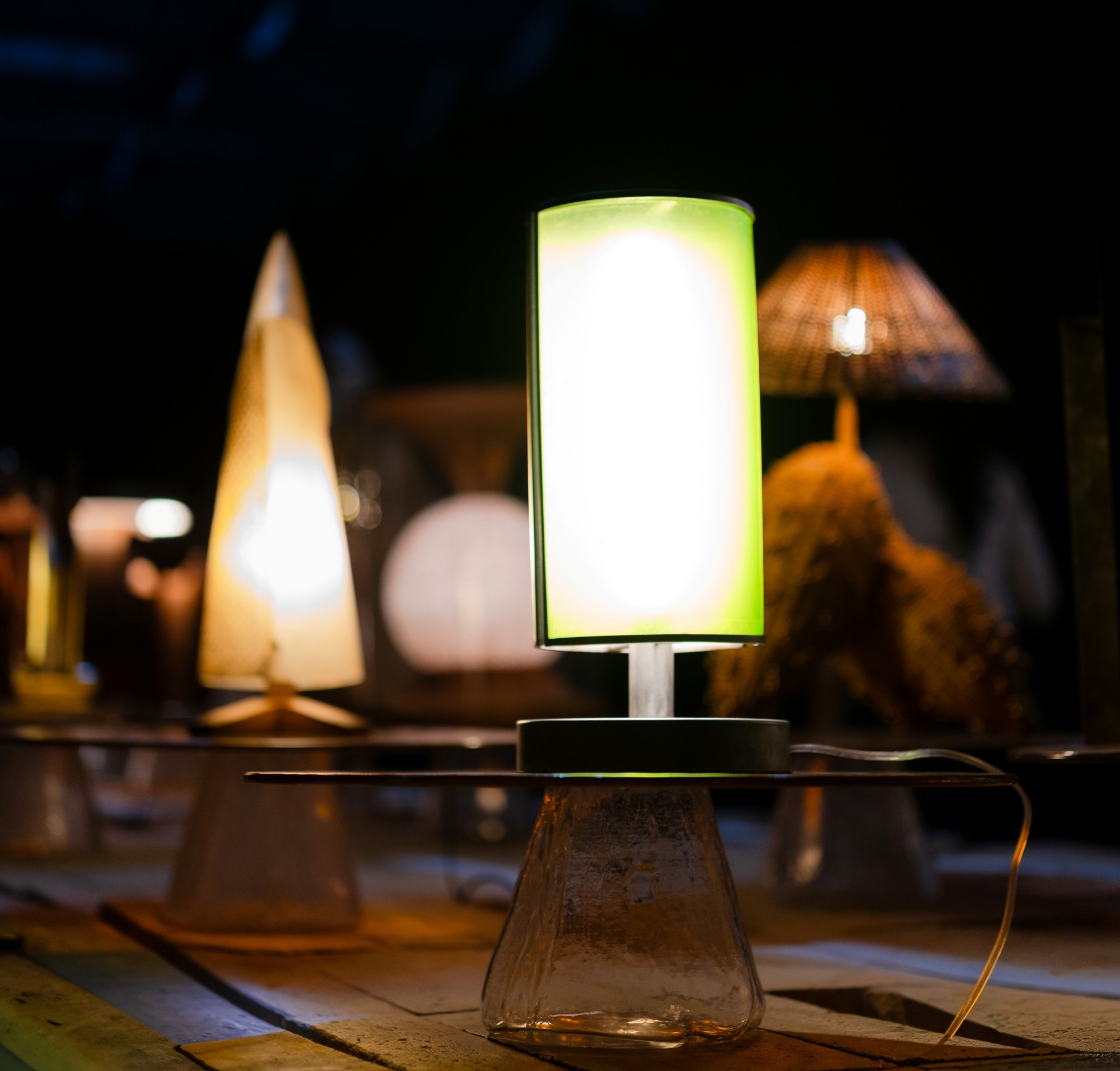
Root and Reef by Anomalia
One of the works that immediately caught Huzefa's attention was Root & Reef by Mumbai-based Anomalia, founded by Bhakti V Loonawat and Suyash Sawant.
“I love what Anomalia has done with mycelium,” he says, describing the lamp's use of two distinct material expressions.
The lamp is built around two material systems, one grown and the other engineered. The Root component uses a mycelium-based leather alternative cultivated on agroforestry waste and processed into a flexible textile. Reef, meanwhile, uses a seaweed-derived biopolymer harvested from the sea and processed into sheets. These are brought together with torched-finish stainless steel.
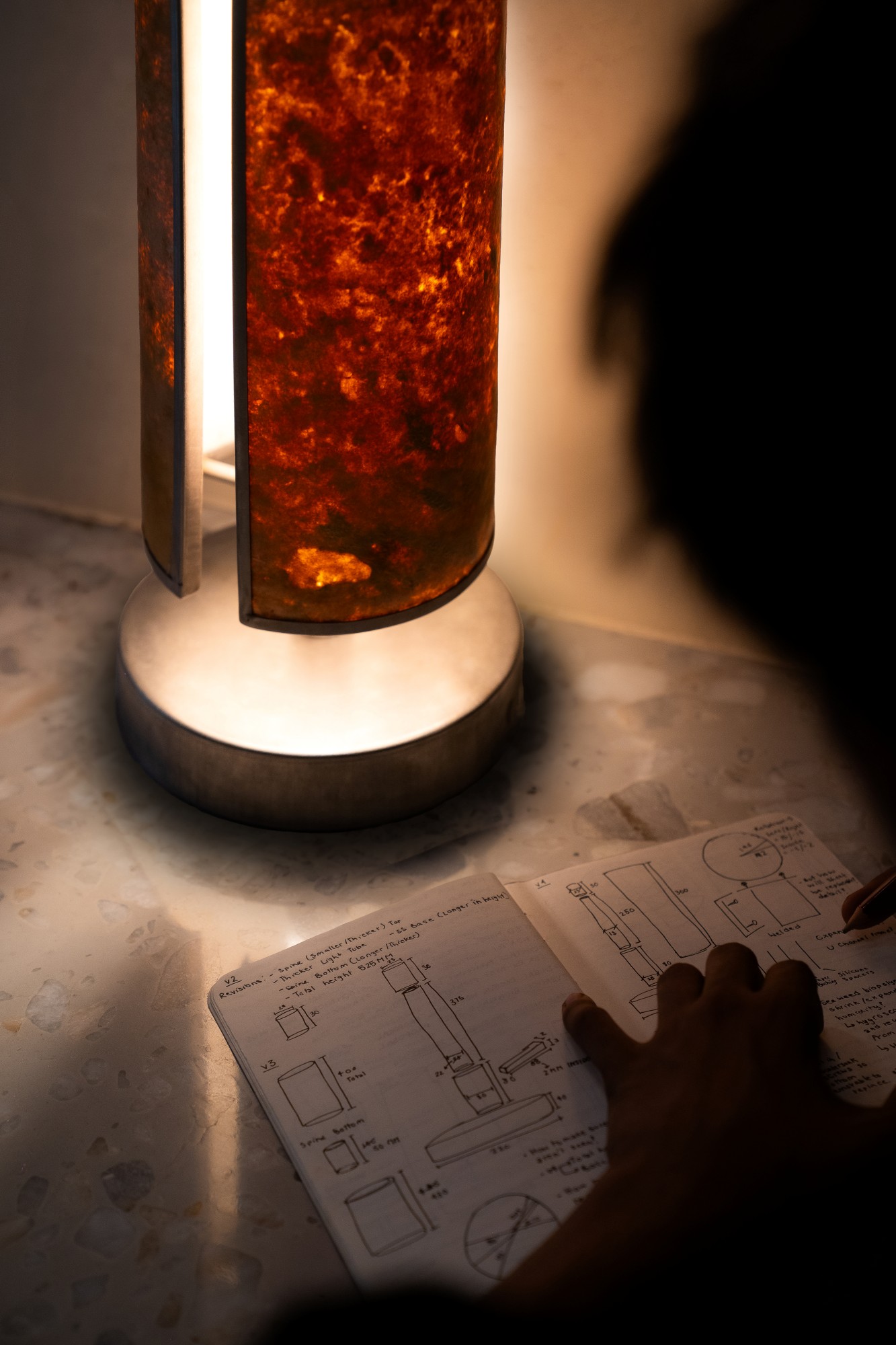
Root and Reef is a lamp developed around two materials: one engineered and one grown
What makes the work significant within Root & Radiance is that sustainability is not simply applied to a conventional lamp through the substitution of one material for another. The material research determines the identity of the object itself. Anomalia's wider practice similarly investigates biomaterials including mycelium, seaweed-based biopolymers and recycled plastics.
This and That: Sabai Grass and the Knowledge of Craft
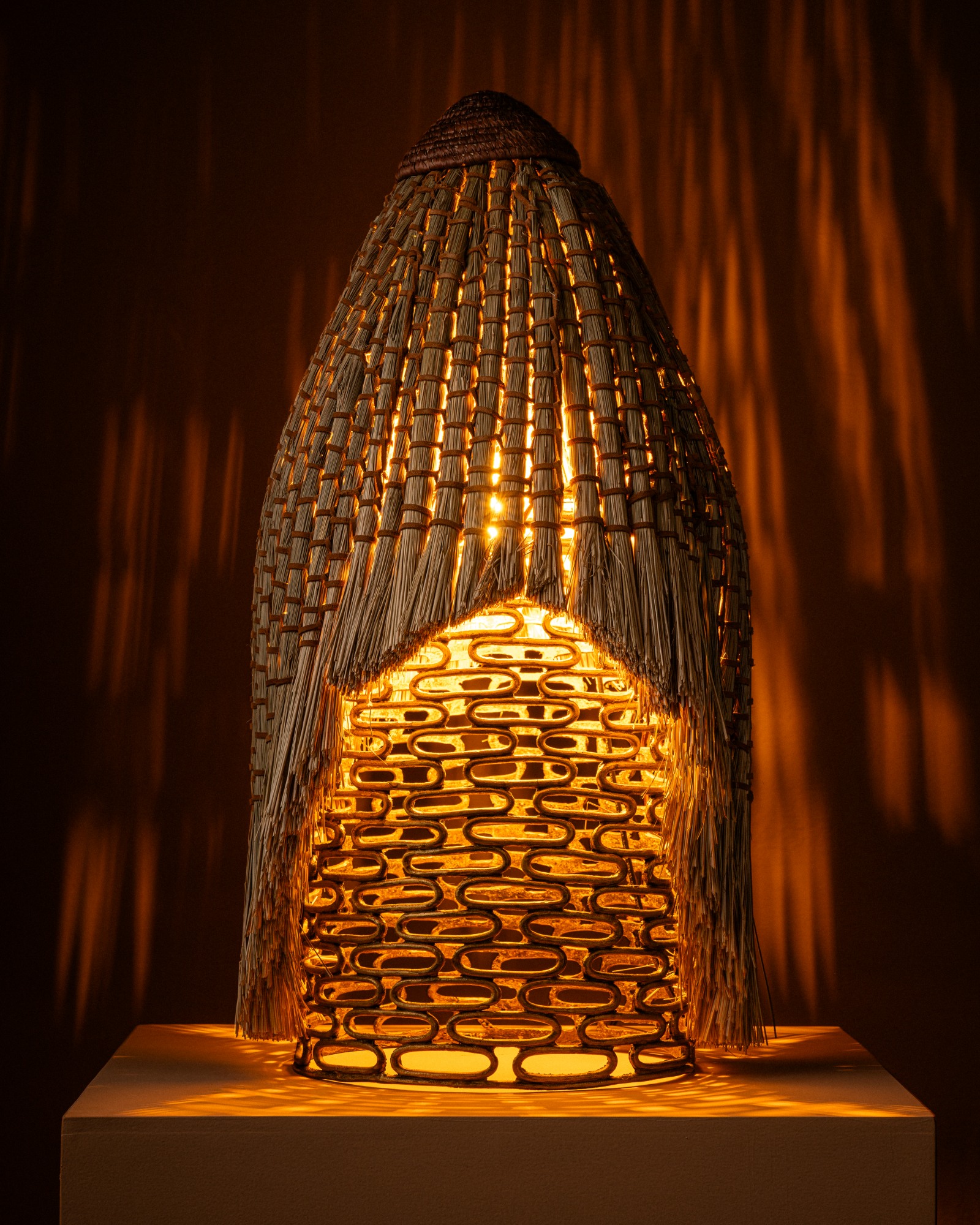
A lamp that celebrates grass weaving
Huzefa also singles out Ariane Ginwala of This and That, whose work with Sabai grass he has long admired.
Her Niraba Rohini Lamp shifts the conversation from material innovation to an existing craft tradition. The lamp works with Sabai grass weavers from Mayurbhanj in Odisha, using sustainably dried Sabai grass native to the region. Dhokra metal is combined with the woven grass and thread work to create the light.
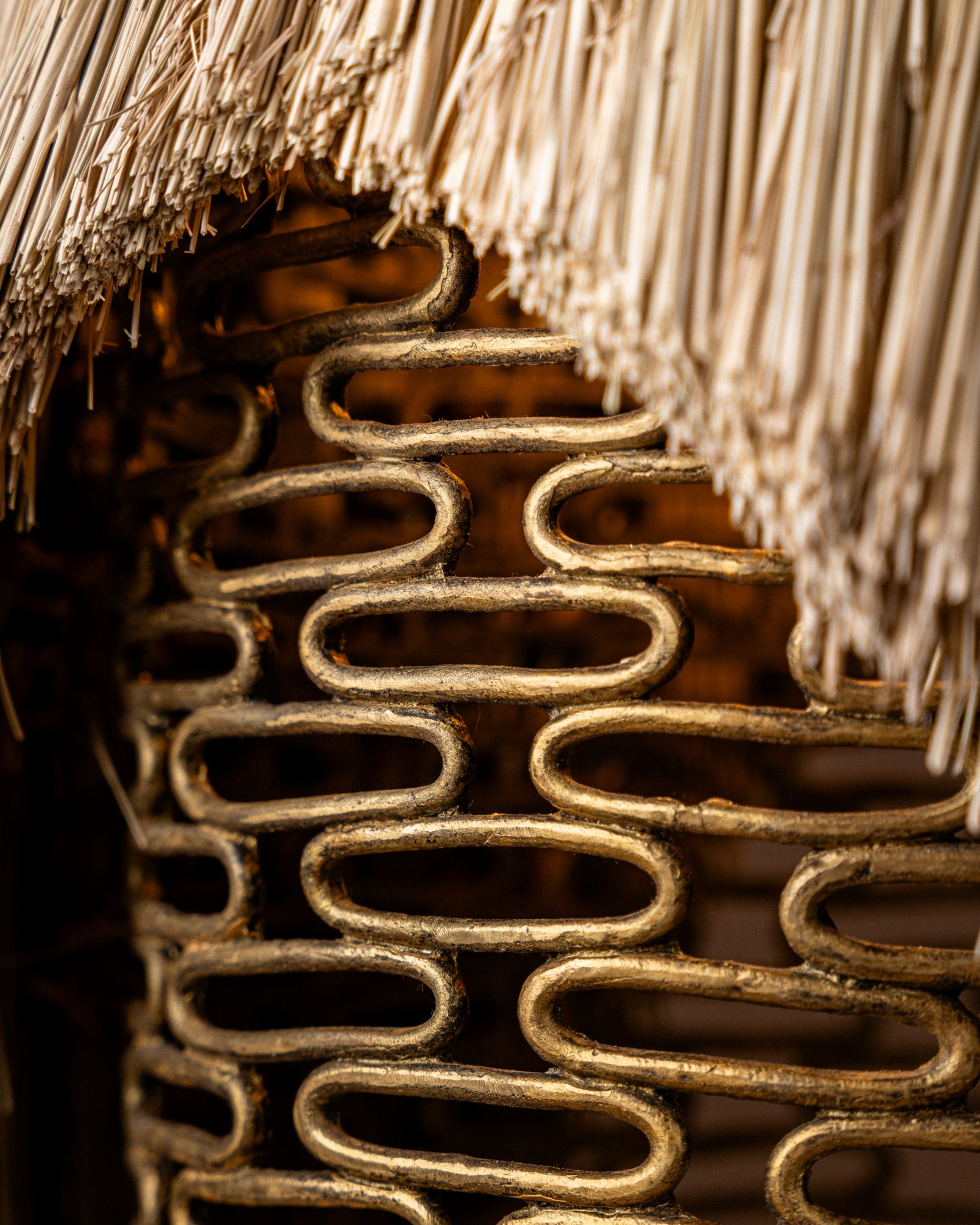
The Niraba Rohini Lamp
The material is therefore inseparable from the people who know how to work with it. This and That's practice works with craft communities across India, bringing together reclaimed wood, handwoven textiles and traditional techniques. In Niraba Rohini, an indigenous natural material and the knowledge of its weavers become central to the design rather than simply its decorative finish.
HSC Designs: Construction Waste Becomes Luminal Loop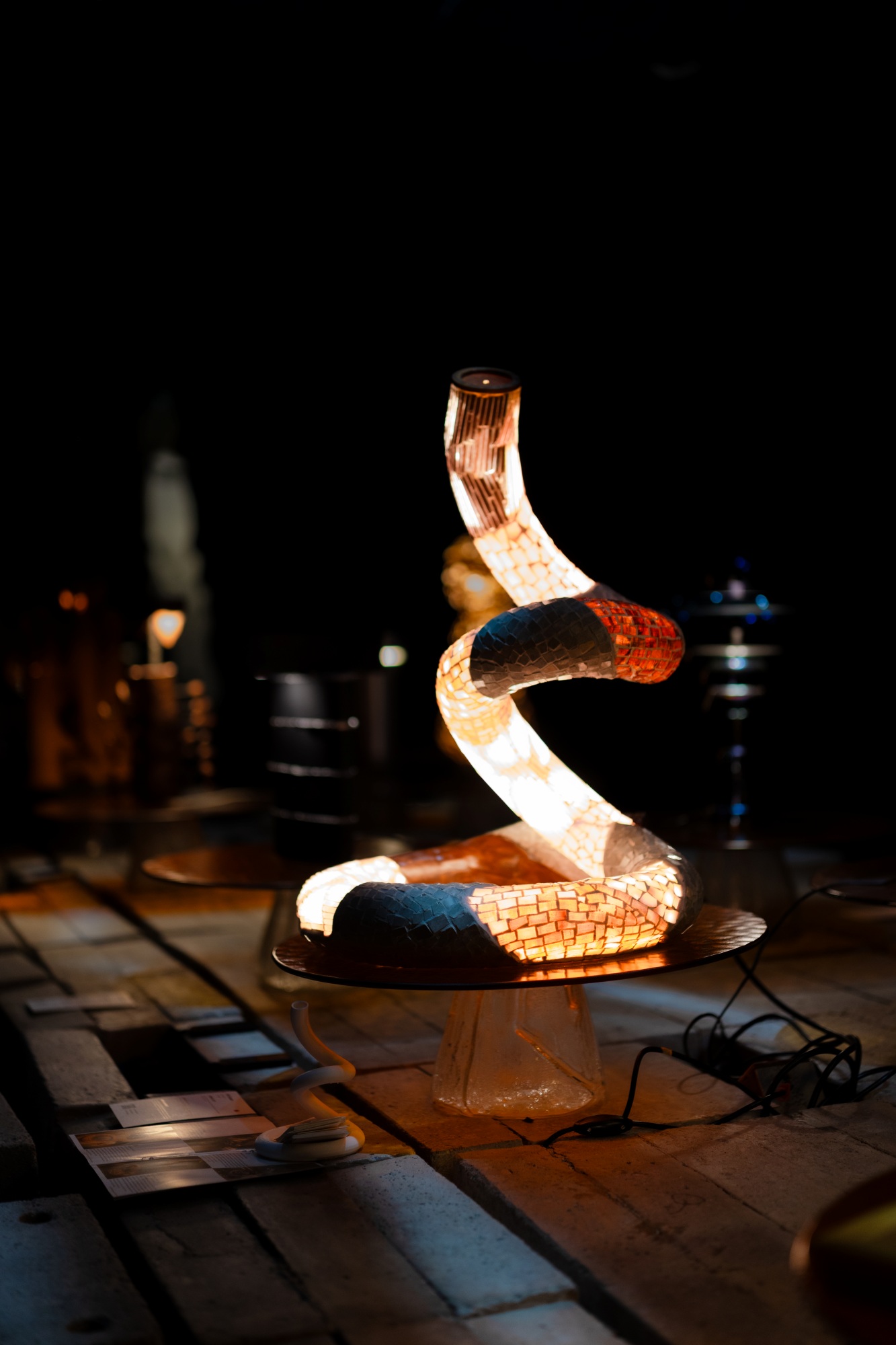
Luminal Loop draws from the serpentine body and its breathing, shifting skin, translating movement into a continuous sculptural form
A very different approach comes from Ahmedabad-based architect Hiloni Sutaria of HSC Designs. Huzefa describes her take on construction waste as “phenomenal.”
Her sculptural Luminal Loop draws its form from the movement and shifting skin of a serpent. Its fragmented surface is made using tile, mosaic, wood, glass sticks and stained glass. Different depths within the surface are revealed when the lamp is illuminated, producing changing shadows, textures, colours and intensities. Light effectively becomes another material that completes the object.
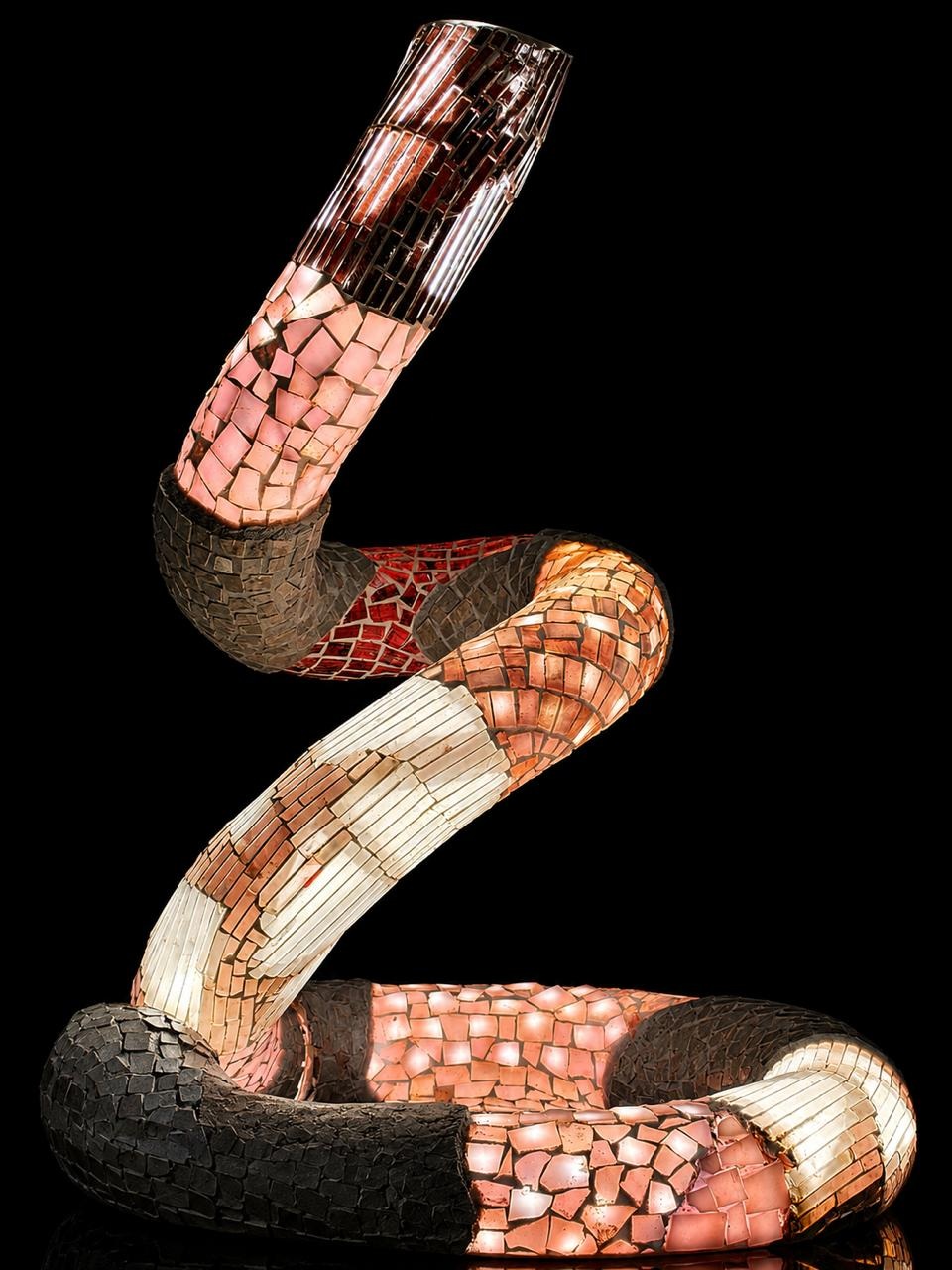
Luminal Loop by HSE Designs
The work connects to HSC Design's broader interest in material reuse and zero-waste methods in architecture. Here, fragments associated with construction are not concealed or made to resemble a pristine new material. Their differences become part of the visual language of the lamp.
Design ni Dukaan: Designed to Be Taken Apart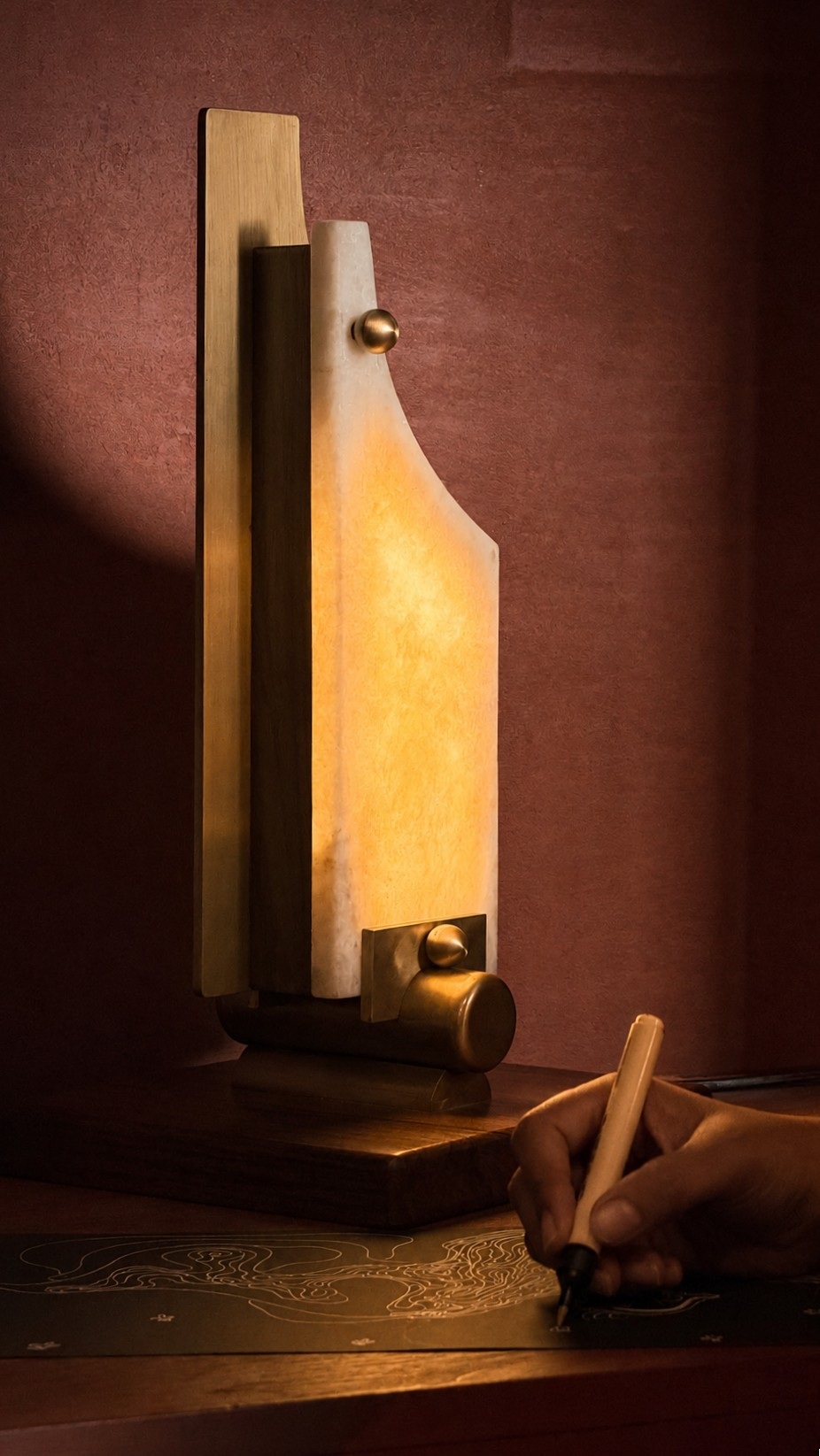
The Scarpian Construct by Design ni Dukaan
Ahmedabad-based Design ni Dukaan, led by Veeram Shah, approaches sustainability through what already exists. Its Scarpian Construct is made from remnants found in the studio's workshop, turning discarded pieces of natural teak, brass and stone into a new functional object.
The lamp is an ode to architect Carlo Scarpa and his attention to material, detail and assembly. But its relevance to Root & Radiance lies particularly in the way it has been put together.
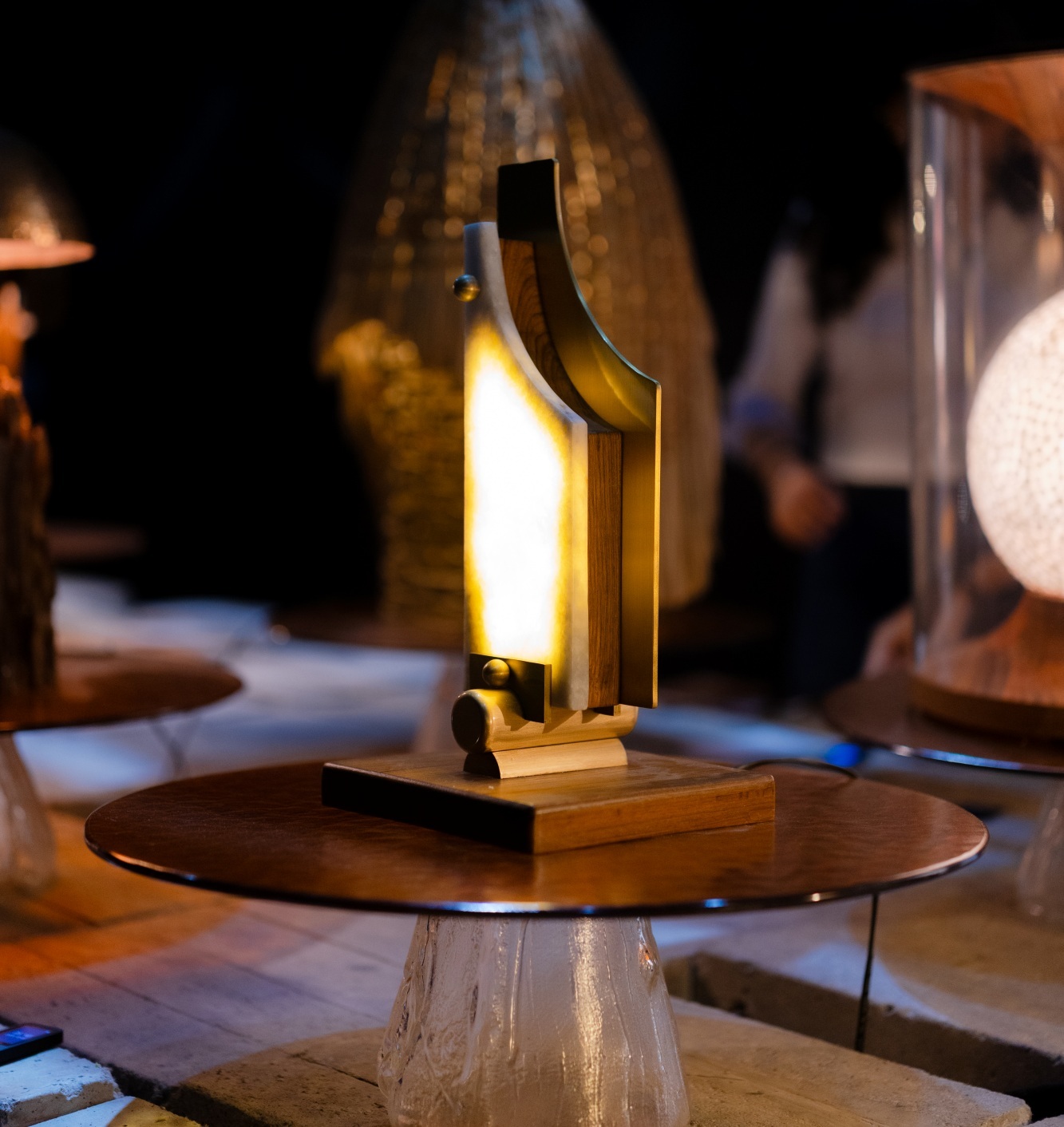
A lamp that can be dismantled, repaired, and replaced.
The components are joined using Allen keys, allowing the lamp to be dismantled, repaired, and individual parts replaced over time rather than the entire object being discarded.
It directly reflects one of the central questions raised by the exhibition: what if products were designed to be repaired rather than replaced?
Ek Kalaakar: Finding Beauty in Imperfection
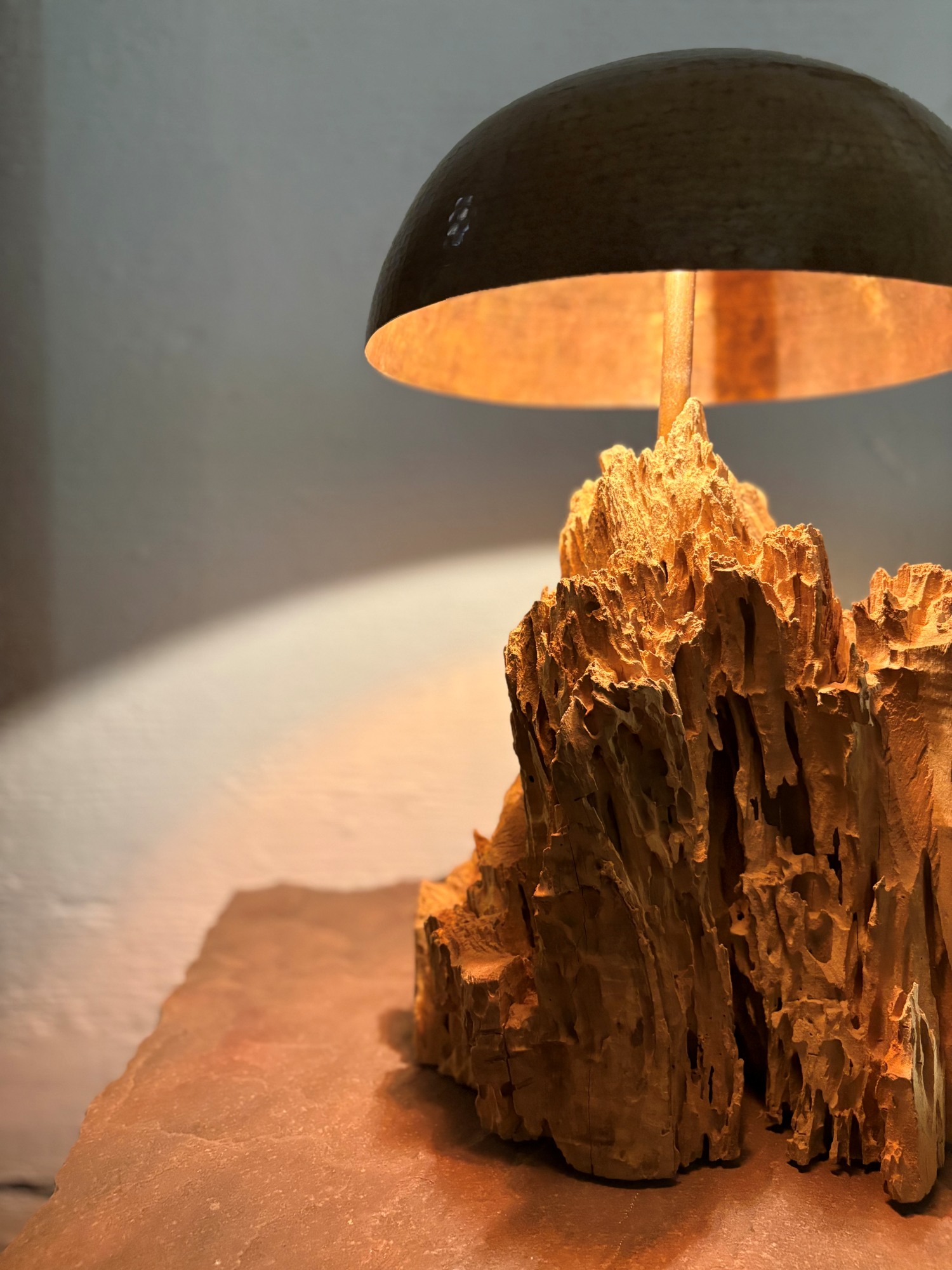
The Rotten Glow by Ek Kalaakar
For Ahmedabad-based Anurag Bhandari of Ek Kalaakar, sustainability begins with recognising the value of materials that might otherwise be discarded.
His lamp, The Rotten Glow, is created around a piece of salvaged wood, retaining its natural cracks, termite-shaped cavities and weathered textures. Rather than altering the wood to achieve a perfect finish, Anurag Bhandari allows its existing character to determine the design.
An adjustable copper shade and two atmospheric lighting modes introduce functionality to the sculptural piece. Every detail is developed around the salvaged material, allowing its imperfections to become the defining feature of the lamp.
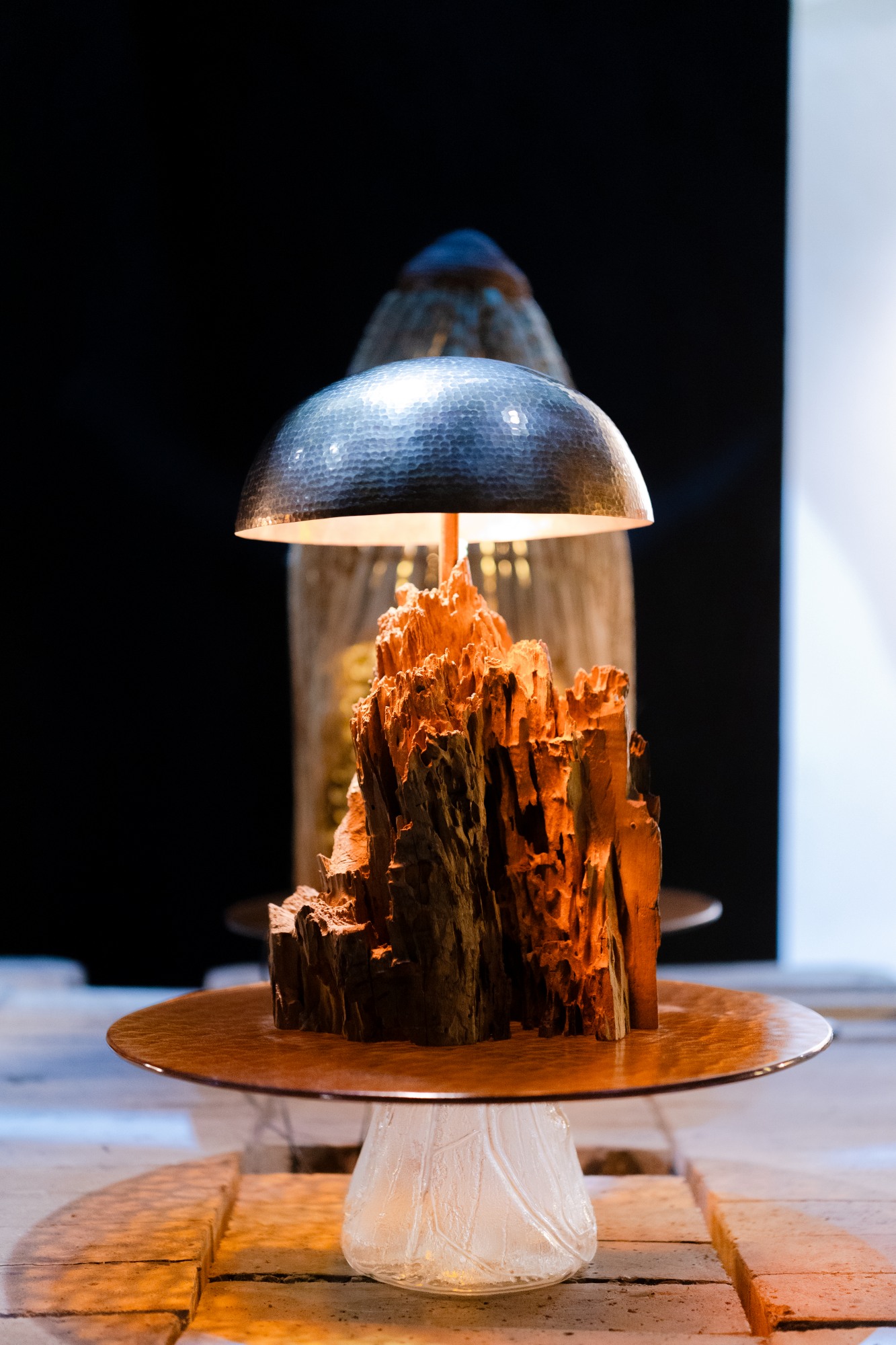
The Rotten Glow gives discarded wood a new life
Ek Kalaakar's approach is rooted in the belief that every material already carries a story. By working with what exists rather than against it, Bhandari gives discarded wood a new purpose without erasing the marks of its previous life.
Mitty Sitty: A Landscape Shaped in Clay
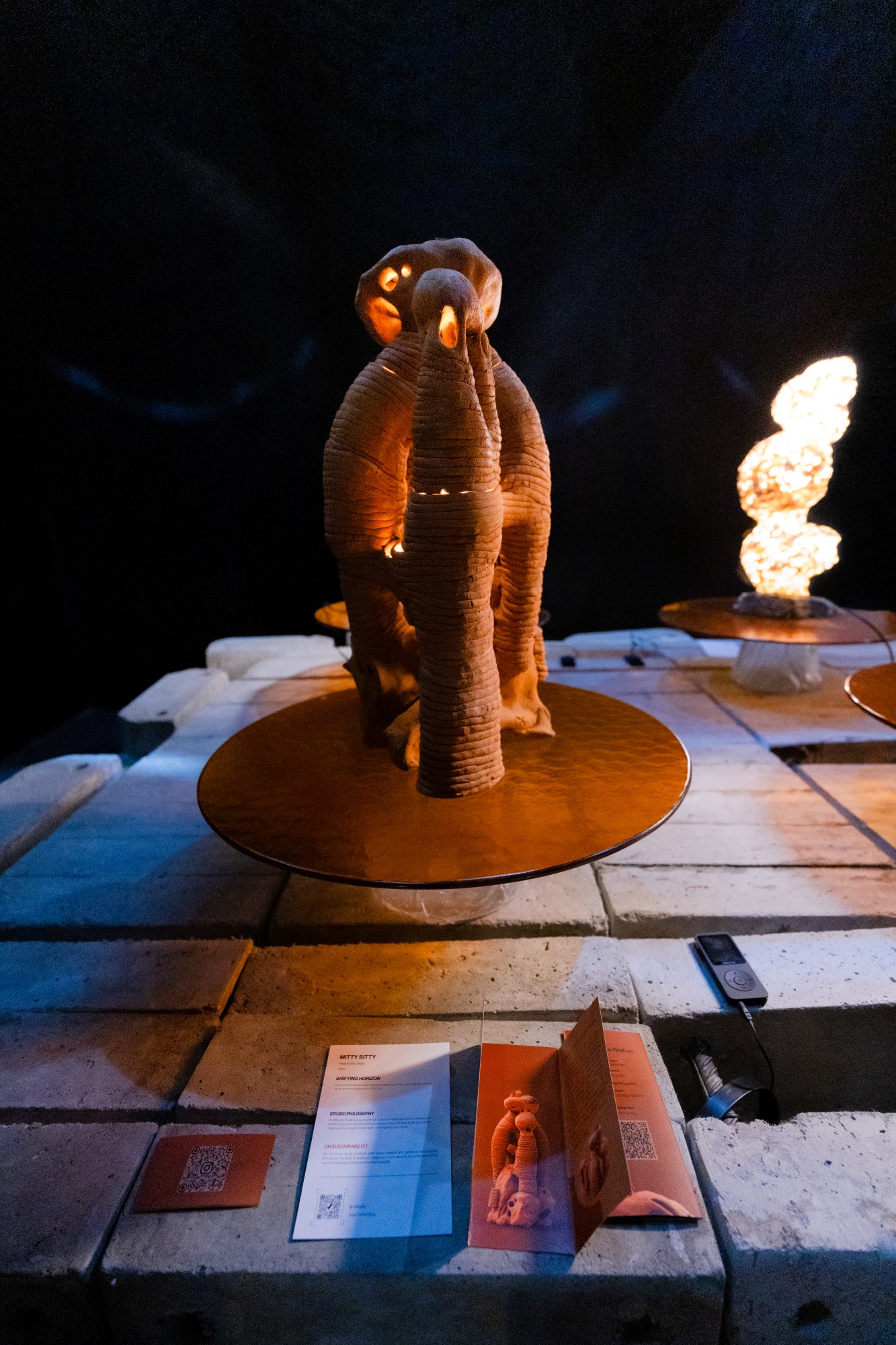
Shifting Horizon by Mitty Sitty
For Jaipur-based artist and sculptor Vikas Kumar Yadav of Mitty Sitty, the material is much more elemental: terracotta and natural clay. His Shifting Horizon extends his art practice into a functional object, drawing inspiration from the layered landscapes of Manali.
Built entirely by hand, the sculptural lamp uses coiling and organic contours to interpret the changing forms of mountains and valleys. Once illuminated, light adds another dimension, creating depth and shifting spatial experiences across the clay surface. Each piece retains the traces of the artist's hand and is conceived not as mass-produced décor but as an individual functional artwork.
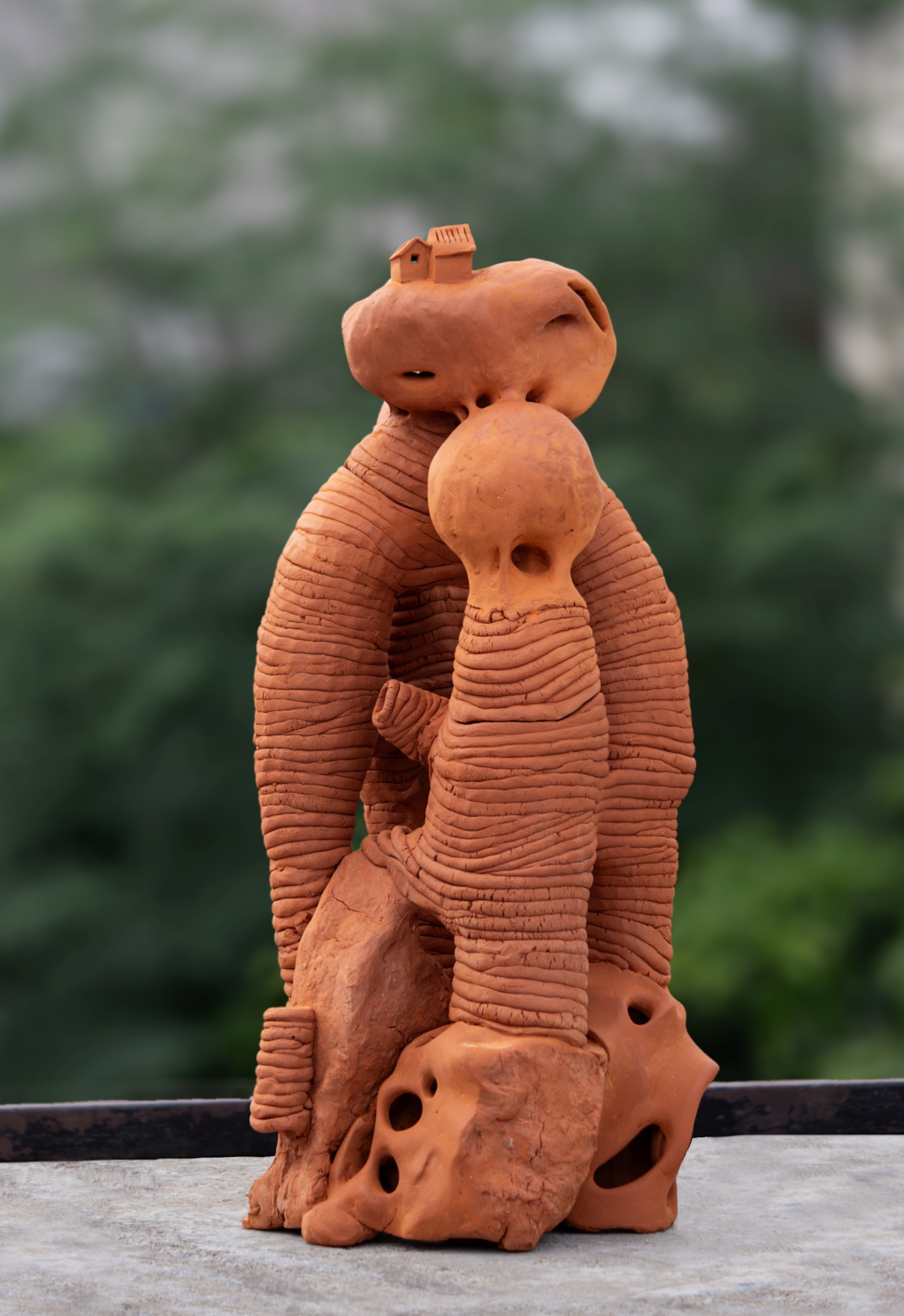
The lamp is inspired by the city of Manali
What was most touching about this piece was not just its craft, but the passion of its creator, Vikas Kumar Yadav. “Vikas stood by his work and explained its craft to everyone who walked past the gallery,” says Huzefa, pointing to the personal intent and engagement that can make an object resonate beyond its material and form.
Interestingly, Mitty Sitty also connects back to MuseLAB’s answer when asked what material they would choose to work with: “Clay, a material that is malleable, familiar and ultimately something that comes from the earth.:
Field Architects: A Ladakhi Object Reimagined as Light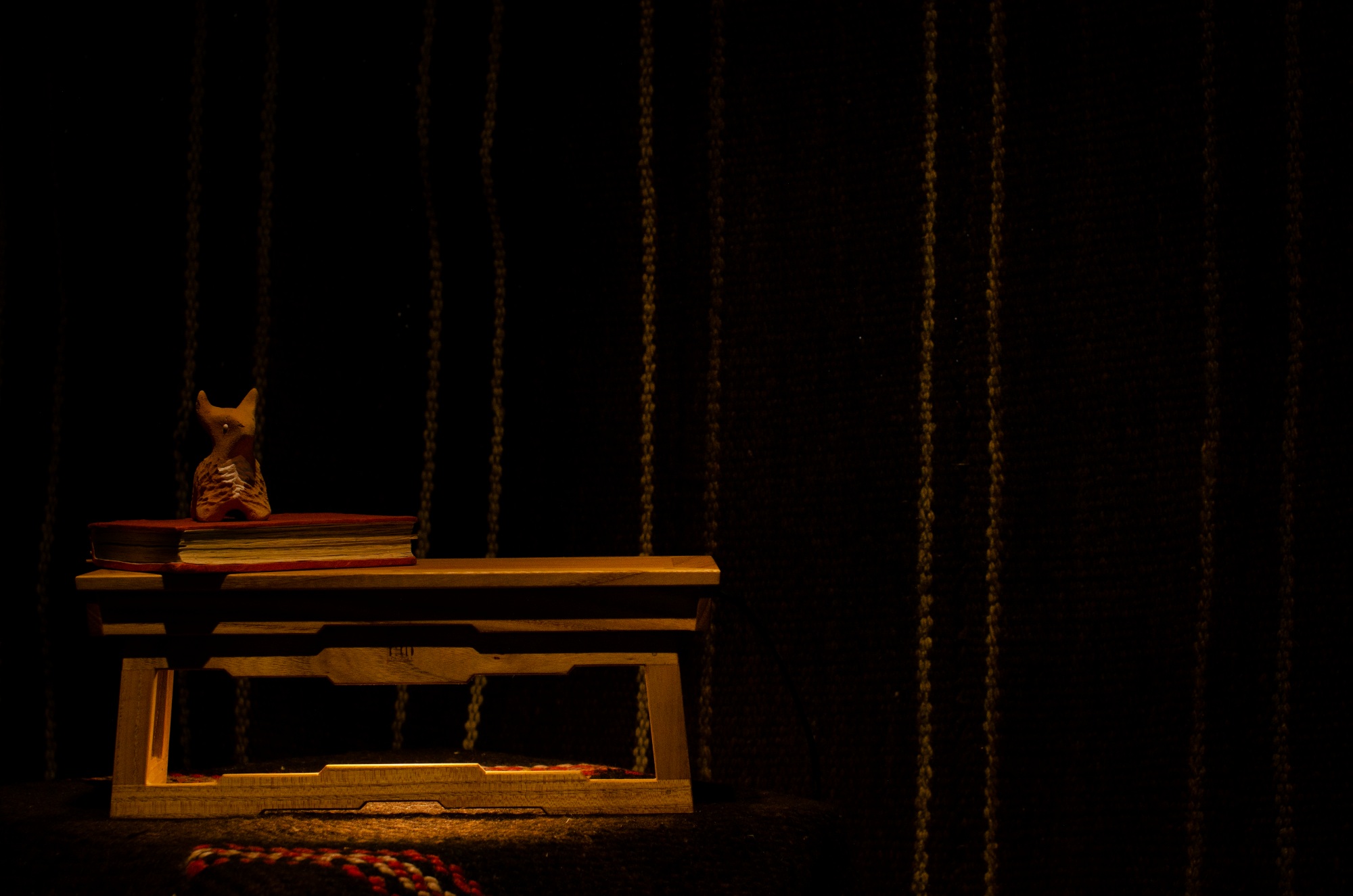
Zimsting by Field Architects
But there was one lamp that Huzefa and MuseLAB co-founder Jasem Pirani made their own.
“Jasim and I have already put a red dot on the lamp by Field Architects. We bought that the minute we unboxed it, and we said, this is coming home with us,” Huzefa says.
Designed by Faiza Khan and Suril Patel of Field Architects, who work between Ladakh and Ahmedabad, Zimsting looks at sustainability through cultural memory and vernacular forms rather than material reuse alone.
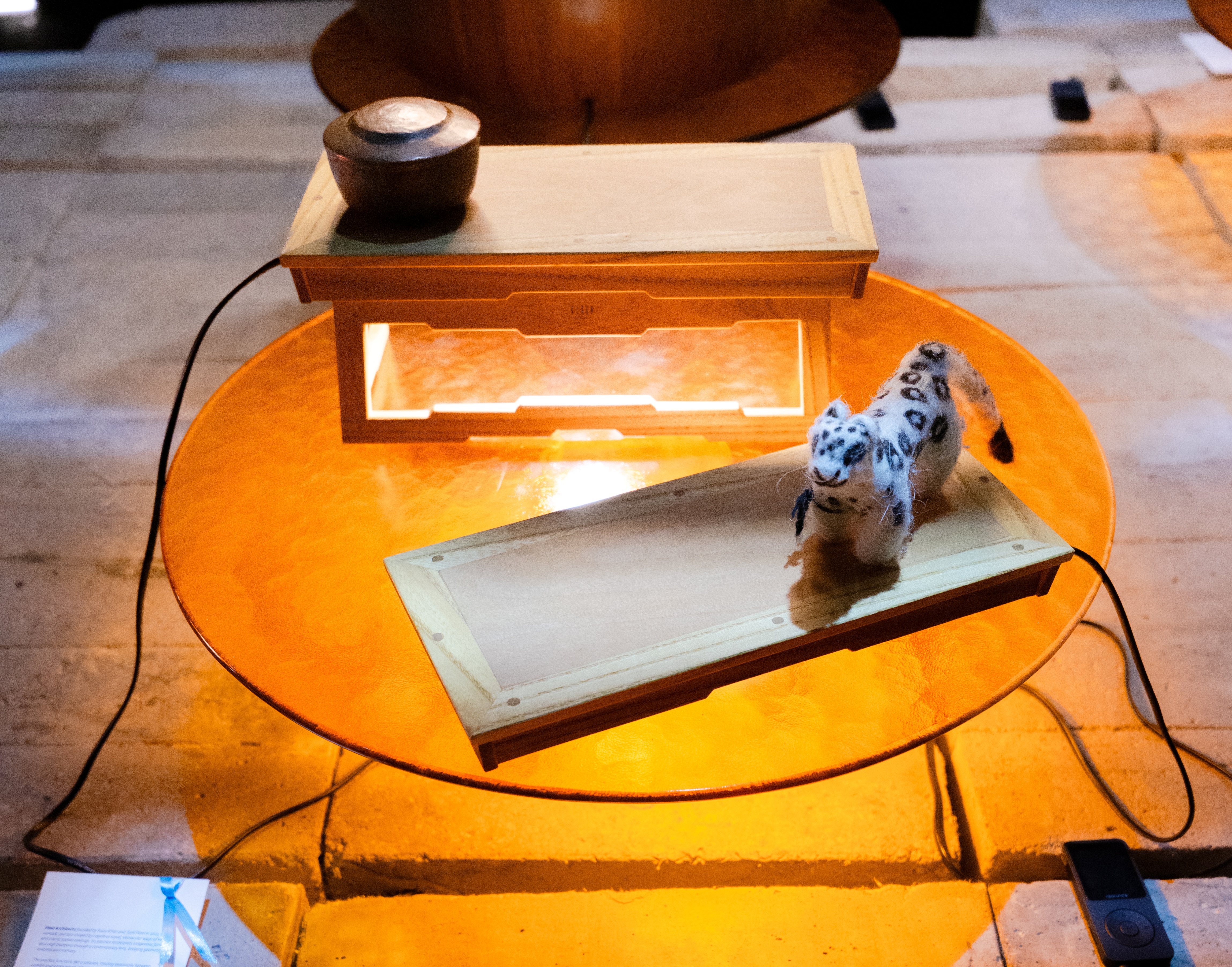
A lamp that draws its design from the region
The light reinterprets two objects embedded in the Ladakhi-Tibetan household: the chok, the low table around which everyday gatherings take place, and the skyongste, the vessel of the traditional lamp associated with warmth, ritual and light. Made from elm and Chinar wood, the compact object draws on Himalayan nomadic life and is conceived to be movable and adaptable while remaining physically grounded.
Field Architects' practice itself is rooted in studying vernacular life and indigenous forms, which it deconstructs through a contemporary lens. Zimsting consequently makes a useful point within the exhibition: sustainability can also lie in carrying an existing typology, and a way of living forward rather than continually inventing something new.
Sustainability Without the Label
Huzefa is unusually candid about where the practice stands. “Very honestly, as a practice we are not a sustainable practice,” he says, explaining that for MuseLAB the current starting point is “honest design with a little bit of whimsy.”
He acknowledges the depth of research behind the works in the exhibition and says developing that level of understanding in sustainable product design takes time.
There is no single sustainable material or visual language running through the 20 lamps. Instead, sustainability appears through material research, repair, reuse, craft knowledge, local resources, cultural memory and longevity.
As the exhibition proposes, the more relevant question may not be what a sustainable object looks like, but how it is made, what it carries forward and how long we choose to live with it.
Images courtesy of MuseLAB and Design Democracy